

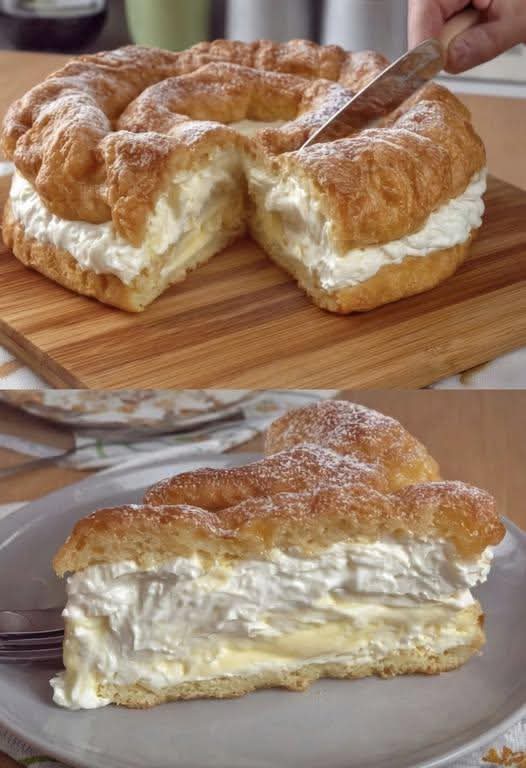
Learn to make the iconic Paris-Brest, a classic French dessert of choux pastry rings filled with praline mousseline cream. Our step-by-step recipe guides you to create this show-stopping, elegant pastry perfect for special occasions and impressive baking projects.
In the world of classic French pâtisserie, where precision meets artistry, few desserts tell a story as delicious as the Paris-Brest. Imagine a crown of golden, airy choux pastry, split and generously filled with a cloud of the most sublime nutty cream imaginable—a praline mousseline that is at once light, rich, and deeply flavorful. This is not just a dessert; it is an edible monument to a bicycle race, a celebration of texture and taste, and the ultimate show-stopping centerpiece for any table.
Created in 1891 to commemorate the Paris–Brest–Paris bicycle race, its wheel-like shape is a tribute to the cyclists’ endurance. But for the home baker, mastering a Paris-Brest is a different kind of rewarding challenge. It combines three fundamental skills: making perfect pâte à choux (the same dough as eclairs and cream puffs), creating a luxurious cooked buttercream, and mastering the art of elegant assembly. The result is a dessert that balances the crisp, eggy shell of the pastry with the smooth, nut-butter-infused cream in a way that feels both decadent and somehow light.
While it may seem like a project for advanced bakers, this detailed, foolproof recipe breaks down each component into manageable steps. With patience and attention to detail, you can create this iconic French pastry at home, earning awe from family and friends. It’s the perfect project for a special occasion, a holiday celebration, or when you simply want to treat yourself to the pinnacle of classic baking.
Why the Paris-Brest is a Culinary Must-Make
Before we preheat the oven, let’s appreciate what makes this dessert a timeless classic:
· A Symphony of Textures: The contrast between the crisp, hollow choux ring and the velvety, rich praline cream is unparalleled.
· The Depth of Flavor: Praline (caramelized hazelnuts or almonds ground into a paste) gives the cream a complex, toasty, sweet flavor that is far more interesting than plain vanilla.
· An Impressive yet Approachable Showpiece: Its circular, crowned appearance looks professional and celebratory, yet the construction is straightforward.
· The Ultimate Baking Benchmark: Successfully creating a Paris-Brest marks a significant achievement in a home baker’s journey, combining several core techniques into one glorious dessert.
· Make-Ahead Components: Every part—the choux ring, the praline paste, and the cream—can be made in stages, making final assembly less stressful.
Ingredients for an Authentic Paris-Brest
This recipe is divided into three main components: the choux ring, the praline paste (which can be store-bought to save time), and the praline mousseline cream.
For the Pâte à Choux Ring:
· ½ cup (120ml) water
· ½ cup (120ml) whole milk
· ½ cup (1 stick / 113g) unsalted butter, cubed
· 1 tablespoon granulated sugar
· ½ teaspoon salt
· 1 cup (125g) all-purpose flour, sifted
· 4 large eggs, at room temperature
· For garnish: Sliced almonds and powdered sugar
For the Praline Paste (or use ½ cup store-bought):
· 1 cup (150g) blanched hazelnuts or almonds
· ½ cup (100g) granulated sugar
· 2 tablespoons water
· A pinch of salt
For the Praline Mousseline Cream:
· 1 ½ cups (350ml) whole milk
· 4 large egg yolks
· ½ cup (100g) granulated sugar
· ¼ cup (30g) cornstarch
· Pinch of salt
· 1 cup (2 sticks / 226g) unsalted butter, softened but cool, cubed
· ½ cup praline paste (from above or store-bought)
· 1 teaspoon pure vanilla extract
Pro-Tip Ingredient Notes:
· Dairy for Choux: The combination of water and milk gives a richer flavor and better color than water alone.
· Eggs at Room Temp: Crucial for proper emulsion and rise. Cold eggs can shock the dough.
· Praline Paste: Making it from scratch is rewarding and fills your kitchen with an amazing aroma. However, a good-quality store-bought praliné (like from Valrhona or a European grocery) is an excellent time-saving substitute and ensures consistent flavor.
· Butter for Cream: Must be softened but still cool. If it’s too warm, it will melt and break the cream.
Step-by-Step Instructions: Building the Masterpiece
We’ll build this in stages: Paste, Cream, Choux, then Assembly.
Part 1: Make the Praline Paste (Can be done days ahead)
Toast nuts on a baking sheet at 350°F (175°C) for 8-10 minutes until fragrant. For hazelnuts, rub in a kitchen towel to remove most skins.
In a heavy-bottomed saucepan, combine sugar and water. Cook over medium heat, without stirring, until it turns a deep amber color.
Immediately remove from heat, add the toasted nuts and salt, and stir quickly to coat. Pour onto a parchment-lined baking sheet.
Let cool completely until hard. Break into pieces and grind in a food processor until it forms a smooth, liquid paste (this can take 5-10 minutes; it will go from powder, to a ball, then to a paste). Store in an airtight jar.
Part 2: Make the Praline Mousseline Cream
Heat milk in a saucepan until just simmering.
Whisk egg yolks, sugar, cornstarch, and salt in a bowl until pale and thick.
Gradually whisk half the hot milk into the yolk mixture to temper, then pour everything back into the saucepan.
Cook over medium heat, whisking constantly, until the pastry cream thickens and boils for 1 full minute. It will be very thick.
Strain into a clean bowl. Press plastic wrap directly on the surface and chill for at least 2 hours, until completely cold.
To Finish: In a stand mixer with the paddle, beat the cold pastry cream on medium until smooth. With the mixer running, add the softened butter one cube at a time, waiting until each is incorporated. Once all butter is in, beat on medium-high for 2-3 minutes until light, fluffy, and whipped. Beat in the praline paste and vanilla until uniform. Cover and set aside (not in fridge if your kitchen is cool).
Part 3: Make & Bake the Choux Ring
Preheat oven to 400°F (200°C). Trace an 8-inch circle on a piece of parchment paper, flip it over, and place on a baking sheet.
In a medium saucepan, combine water, milk, butter, sugar, and salt. Bring to a full boil.
Remove from heat, add all the sifted flour at once, and stir vigorously with a wooden spoon until a smooth dough forms and pulls away from the sides.
Return to low heat and “dry” the dough for 1-2 minutes, stirring constantly. A film will form on the pan bottom. Transfer to a mixing bowl.
Let cool for 5 minutes. With a mixer or by hand, beat in the eggs one at a time, fully incorporating each before adding the next. The dough should be smooth, shiny, and pipeable.
Fit a piping bag with a large star tip (like ATOW 867). Pipe two concentric rings of dough directly onto your traced circle. Pipe a third ring on top where the two rings meet. Sprinkle with sliced almonds.
Bake at 400°F for 20 minutes. DO NOT OPEN OVEN. Reduce heat to 350°F (175°C) and bake for 25-30 minutes more, until deep golden, puffed, and very firm.
Turn oven off. Poke a few small holes in the ring with a skewer to release steam. Prop the oven door open with a wooden spoon and let the ring dry inside for 30 minutes. Cool completely on a wire rack.
Part 4: Assemble the Paris-Brest
Using a serrated knife, carefully slice the cooled choux ring in half horizontally.
Fit a piping bag with a star tip and fill with the praline mousseline cream.
Pipe generous rosettes or a continuous swirl of cream onto the bottom half of the choux ring.
Gently place the top half of the ring over the cream.
Dust the top liberally with powdered sugar just before serving.
Expert Tips for Pâtisserie-Quality Results
· “Dry” the Dough Properly: This step in making choux is non-negotiable. It evaporates excess moisture, ensuring the pastry puffs up and doesn’t collapse.
· Eggs Are Key: The number of eggs can vary slightly based on flour and climate. The dough is ready when it falls from the beater in a thick, smooth “V” shape.
· Cool the Pastry Cream Thoroughly: It must be completely cold before adding the butter, or the butter will melt and the cream will be runny.
· Butter Temperature for Mousseline: The butter must be soft but still cool (around 65°F/18°C). If it’s greasy or oily, chill it briefly.
· Serve Fresh: Assemble no more than 2-3 hours before serving for the best contrast between crisp pastry and creamy filling.
Delicious Variations to Try
· Chocolate Praline: Add 2 oz of melted and cooled dark chocolate to the mousseline cream.
· Coffee Praline: Infuse the milk for the pastry cream with 1 tbsp of instant espresso or ground coffee.
· Individual Paris-Brest: Pipe smaller 3-inch rings to make individual servings.
· Different Nuts: Use all almonds for a classic praliné aux amandes, or a mix of hazelnuts and pistachios.
Frequently Asked Questions (FAQ)
Can I make components ahead of time?
Yes!Praline paste keeps for weeks. Baked, unfilled choux rings freeze well for a month (recrisp in oven). Pastry cream base can be made 2 days ahead. Finish the mousseline cream and assemble the day of serving.
Why did my choux ring deflate?
Likely underbaking,opening the oven too early, or not drying it out enough after baking. Ensure it’s deeply golden and firm, and use the drying step in the turned-off oven.
My mousseline cream is runny/curdled. Can I fix it?
If runny,the butter or pastry cream was too warm. Chill the whole bowl for 15 minutes, then re-whip. If curdled (butter too cold), gently warm the outside of the bowl with a hair dryer or warm towel while whipping until it comes together.
What’s the difference between crème mousseline and crème patissière?
Crème patissière is the thick vanilla pastry cream.Crème mousseline is crème patissière that has been lightened by whipping in softened butter, making it richer and pipeable.
How do I store leftovers?
Store assembled Paris-Brest in the refrigerator,loosely covered, for up to 24 hours. The pastry will soften but will still be delicious.
Creating a Paris-Brest is a love letter to the art of baking. It is a rewarding journey that ends with a dessert of stunning beauty and sublime flavor—a true celebration on a plate. By mastering this classic, you connect with a century of pastry tradition and bring a touch of Parisian elegance to your kitchen.
It challenges you, rewards you, and ultimately proves that the most impressive creations are born from understanding and patience. So, gather your ingredients, embrace the process, and prepare to bake something truly extraordinary.
Have you taken on the Paris-Brest challenge? Share your triumphs, your beautiful rings, and your questions in the comments below!
Ready for another French classic? Test your skills with our Perfect Fraisier Cake or Chocolate Éclairs recipe next!
More Recipes You Might Like
-

Crock Pot Chicken And Noodles Belongs
The Ultimate Comfort: Why 4-Ingredient Crock Pot Chicken And Noodles Belongs in Your Weekly Rotation There is a specific, almost…
-
Carrot Cake Roll with Cream Cheese Frosting
The Swirl of Perfection: Why Carrot Cake Roll with Cream Cheese Frosting Is the Dessert That Steals the Show There…
-

LOADED CHEESY POCKET TACOS
The Handheld Fiesta: Why Loaded Cheesy Pocket Tacos Are the Dinner Revolution You Need There is a specific, almost primal…