

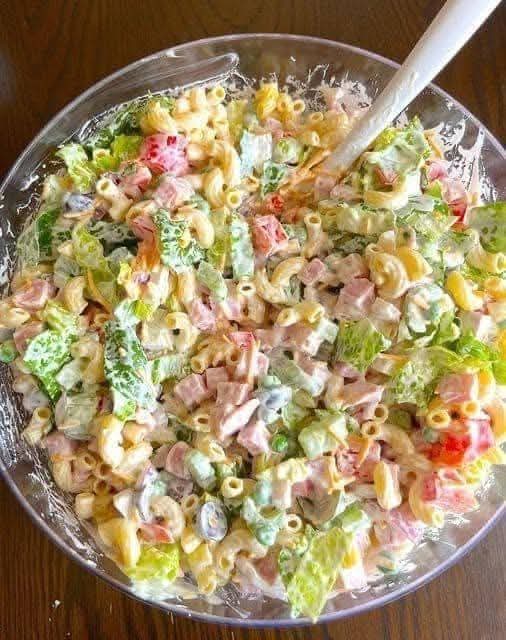
There is a specific, sacred vessel that appears at every summer gathering worth attending. It is not ceramic. It is not porcelain. It is not the fine china that lives behind glass doors and requires hand-washing.
It is a glass bowl. Tall, transparent, slightly curved, revealing in crystalline detail the precise architecture of what lies within. At the bottom, a drift of creamy dressing. Above it, a stratum of al dente pasta. Then a blanket of emerald broccoli, a ribbon of ruby tomato, a snowfall of shredded cheese, a constellation of black olives, a final flourish of fresh herbs.
This is not merely a salad. This is a spectacle. This is edible theater. This is the dish that draws a crowd before the grill even lights.
Layered pasta salad is the unsung hero of the American table. It has never sought the spotlight. It does not demand attention with truffle oil or heirloom varietals or architectural plating. It arrives in its glass bowl, humble and patient, and waits. And then, slowly, inexorably, it empties. Someone takes a scoop. Someone else takes a scoop. The layers collapse into delicious chaos. The bowl is scraped clean. And someone always says, “Who made the pasta salad? I need this recipe.”
This is that recipe. This is the pasta salad that disappears at every potluck, picnic, and backyard barbecue. This is the make-ahead marvel that tastes better on day two than day one. This is the vegetarian main dish that meat-eaters fight over. This is the salad that proves, once and for all, that pasta does not need to be hot to be glorious.
The Philosophy of the Layer
Layered pasta salad is distinct from its tossed cousin in one crucial respect: intention. Tossed pasta salad is democracy—every ingredient equal, every bite a lottery. Layered pasta salad is architecture. It is hierarchy. It is the deliberate arrangement of ingredients to create visual drama and controlled flavor progression.
The glass bowl is not optional. It is the frame that displays the art. A metal bowl hides the layers. An opaque ceramic bowl obscures them. Only clear glass reveals the striated beauty of what you have created.
The order of layers is not arbitrary. It is strategic.
The Dressing Layer: Always at the bottom. This is the foundation. As the salad rests, the dressing gradually permeates upward, seasoning the pasta and vegetables without drowning them. A dry pasta salad is a tragedy. A soggy pasta salad is also a tragedy. The bottom-dressing method prevents both.
The Pasta Layer: Immediately atop the dressing. Pasta acts as a sponge, absorbing the dressing while maintaining its shape. It also provides a structural barrier, preventing heavier toppings from sinking into the dressing reservoir.
The Sturdy Vegetables: Broccoli, carrots, bell peppers, cucumbers. These ingredients can withstand contact with dressing without becoming limp or waterlogged. They provide crunch and color.
The Cheese: A middle layer, protected on both sides by pasta and vegetables. The cheese softens slightly but maintains its integrity.
The Tender Vegetables: Tomatoes, avocados, fresh herbs. These go near the top, added just before serving to prevent them from becoming mushy or discolored.
The Garnish: The final flourish—fresh parsley, basil, a shower of Parmesan, a scattering of olives. This is the promise of what lies beneath.
The Ultimate Layered Pasta Salad Recipe
Yield: 12-16 servings as a side, 8 servings as a main
Ingredients:
For the Dressing:
· 1 ½ cups mayonnaise (full-fat, not salad dressing)
· ½ cup sour cream
· ¼ cup red wine vinegar
· 2 tablespoons lemon juice
· 2 cloves garlic, minced or grated
· 1 tablespoon Dijon mustard
· 1 teaspoon sugar
· 1 teaspoon kosher salt
· ½ teaspoon black pepper
· ½ cup finely grated Parmesan cheese
· ¼ cup chopped fresh parsley
For the Salad:
· 1 lb rotini or fusilli pasta (corkscrews or spirals)
· 2 cups cherry tomatoes, halved
· 2 cups broccoli florets, cut into bite-sized pieces
· 1 ½ cups diced English cucumber (seeds removed)
· 1 cup diced red bell pepper
· 1 cup diced orange or yellow bell pepper
· ½ cup finely diced red onion
· 2 cups shredded sharp cheddar cheese
· 1 can (6 oz) black olives, drained and sliced
· ½ cup sliced pepperoncini or banana peppers (optional, for tang)
· ½ cup fresh basil, chiffonade
For the Garnish:
· Additional shredded Parmesan
· Fresh parsley or basil
· Cracked black pepper
Instructions:
Phase One: The Dressing
Combine: In a medium bowl or large measuring cup, whisk together the mayonnaise, sour cream, red wine vinegar, lemon juice, garlic, Dijon, sugar, salt, and pepper until smooth and emulsified.
Finish: Stir in the grated Parmesan and fresh parsley. Taste and adjust seasoning. The dressing should be tangy, savory, and slightly sharp. Refrigerate while you prepare the remaining ingredients.
Phase Two: The Pasta
Boil: Bring a large pot of generously salted water to a rolling boil. Add the pasta and cook according to package directions until al dente. Do not overcook. Mushy pasta ruins layered salad.
Drain and Rinse: Drain the pasta in a colander and rinse immediately with cold water to stop the cooking process. Shake vigorously to remove excess water. Spread the pasta on a baking sheet in a single layer to cool completely and dry slightly. This prevents clumping and diluting the dressing.
Phase Three: The Vegetables
Prep: Prepare all vegetables as specified. Keep them separate. Pat the cherry tomato halves gently with a paper towel to remove excess seeds and juice. Excess moisture is the enemy of layered salad.
Season (Optional): If you have time, toss the broccoli, bell peppers, and red onion with a pinch of salt and let them sit for 15 minutes. This draws out excess moisture, which you can then blot away. This step ensures your salad does not become watery.
Phase Four: The Assembly
Choose Your Vessel: Select a large, clear glass bowl. A trifle bowl is ideal. A large glass mixing bowl works beautifully. The bowl must be transparent.
The Dressing Foundation: Spread the prepared dressing evenly across the bottom of the bowl. Use an offset spatula or the back of a spoon to create an even layer reaching to the edges.
The Pasta Layer: Gently place half of the cooled pasta over the dressing. Do not press down. Spread it evenly to the edges. This layer absorbs the dressing and prevents the vegetables above from sinking.
The Broccoli and Pepper Layer: Arrange the broccoli florets and diced bell peppers evenly over the pasta. Press gently to create a flat surface.
The Cucumber and Onion Layer: Sprinkle the diced cucumber and red onion over the vegetables. Spread evenly.
The Cheese Layer: Sprinkle the shredded cheddar cheese over the cucumber and onion. Use an even hand; this layer should be visible from the outside of the bowl.
The Remaining Pasta Layer: Gently place the remaining pasta over the cheese. Spread evenly to the edges.
The Tomato and Olive Layer: Arrange the cherry tomato halves and sliced black olives over the top pasta layer. If using pepperoncini, scatter them here as well.
The Herb Finish: Sprinkle the fresh basil chiffonade over the tomatoes and olives.
The Garnish: Finish with a final shower of shredded Parmesan, additional fresh herbs, and a generous crack of black pepper.
Phase Five: The Rest
Cover: Cover the bowl tightly with plastic wrap. Refrigerate for at least 4 hours, preferably overnight. This resting period is non-negotiable. The dressing permeates upward, the flavors meld, and the salad transforms from ingredients into a cohesive dish.
Serve: Remove from the refrigerator 20 minutes before serving. Toss the salad at the table, or allow guests to scoop from the bottom, creating their own perfect mixture of layers. Provide a large serving spoon and fork.
The Pasta Selection Seminar
Not all pasta shapes are suitable for layered salad. The shape must capture and hold dressing, maintain its texture after chilling, and provide structural integrity.
Rotini or Fusilli: The gold standard. The spirals trap dressing in their crevices. They hold their shape beautifully. They are visually interesting.
Farfalle: Bow ties are elegant and substantial. They create distinct visual layers. They hold up well to chilling.
Shells: Medium shells capture dressing and small vegetable pieces in their cups. They are whimsical and effective.
Penne or Ziti: Tubular shapes work but require careful draining. Water trapped inside tubes dilutes dressing. Shake vigorously after rinsing.
Orzo: Too small. It settles into a dense, compacted layer and becomes gluey.
Spaghetti or Linguine: Absolutely not. Long noodles do not layer cleanly and are difficult to serve from a communal bowl.
The Mayonnaise Manifesto
There is no substitute for real mayonnaise in this dressing. Not Miracle Whip. Not salad dressing. Not Greek yogurt pretending to be mayonnaise.
Full-fat, real mayonnaise provides richness, stability, and that unmistakable tangy-creamy profile that defines classic pasta salad. Reduced-fat mayonnaise contains more water and less fat, which can cause the dressing to separate or become watery upon standing.
If you must avoid mayonnaise, substitute an equal mixture of sour cream and Greek yogurt, plus 2 tablespoons of olive oil. The texture will be different but still delicious.
The Make-Ahead Advantage
Layered pasta salad is not merely tolerant of advance preparation; it requires it. This is the dish you make the night before the party, the morning of the picnic, the day before the holiday. It improves with rest.
Four Hours: Minimum resting time. The dressing has begun to penetrate the pasta but has not fully permeated the upper layers.
Overnight: Optimal. The flavors meld completely. The pasta absorbs dressing evenly. The vegetables remain crisp but seasoned.
Twenty-Four Hours: Still excellent. The broccoli may soften slightly, but the overall effect remains delicious.
Forty-Eight Hours: The texture begins to decline. The pasta softens further. The vegetables lose some crunch. Still edible, but not ideal.
The Flavor Universe: Infinite Layered Variations
The template is perfect. But perfection is a starting point, not a destination.
Italian Antipasto Layered Pasta Salad:
Replace the cheddar with provolone or mozzarella. Add a layer of sliced salami, pepperoni, or prosciutto. Use pepperoncini generously. Add marinated artichoke hearts. Substitute Italian dressing for the creamy dressing. This is the antipasto platter, reimagined as a salad.
Greek Layered Pasta Salad:
Replace the cheddar with crumbled feta. Add kalamata olives, diced pepperoncini, and chopped pepperoncini. Use oregano and lemon in the dressing. Add a layer of diced cucumber and red onion near the top. Garnish with fresh dill. This is Greece in a bowl.
Southwest Layered Pasta Salad:
Replace the cheddar with pepper jack. Add a layer of black beans, corn, and diced jalapeño. Use lime juice and cilantro in the dressing. Add diced avocado just before serving. Garnish with crushed tortilla chips. This is the fiesta version.
Caprese Layered Pasta Salad:
Omit the broccoli, bell peppers, and cheddar. Use fresh mozzarella pearls, cherry tomatoes, and generous amounts of fresh basil. Dress with a balsamic vinaigrette. This is summer on a plate.
Caesar Layered Pasta Salad:
Omit the cheddar and use shaved Parmesan. Add a layer of crisp romaine lettuce near the top. Use classic Caesar dressing. Garnish with additional Parmesan and crushed croutons. This is the salad that thinks it’s a meal.
Mediterranean Chicken Layered Pasta Salad:
Add a layer of shredded rotisserie chicken. Use feta and kalamata olives. Add chopped sun-dried tomatoes. Dress with lemon-oregano vinaigrette. This is a complete meal.
The Dressing Spectrum
The creamy garlic Parmesan dressing in the master recipe is canonical. But layered pasta salad welcomes variety.
Classic Italian Vinaigrette: ¾ cup olive oil, ¼ cup red wine vinegar, 2 tablespoons lemon juice, 1 tablespoon Dijon, 2 cloves garlic, 1 teaspoon dried oregano, salt, pepper. Whisk to emulsify.
Creamy Balsamic: 1 cup mayonnaise, ¼ cup balsamic vinegar, 2 tablespoons honey, 1 clove garlic, salt, pepper. Sweet, tangy, rich.
Lemon Herb: 1 cup Greek yogurt, ½ cup mayonnaise, ¼ cup lemon juice, 2 tablespoons olive oil, ¼ cup chopped fresh dill and parsley, 2 cloves garlic, salt, pepper. Bright and fresh.
Ranch: 1 cup mayonnaise, ½ cup sour cream, ¼ cup buttermilk, 1 packet ranch seasoning, 2 tablespoons fresh dill. Classic for a reason.
Spicy Chipotle: 1 cup mayonnaise, ¼ cup lime juice, 2 tablespoons adobo sauce from canned chipotles, 1 minced chipotle, 1 clove garlic, 1 teaspoon honey, salt. Smoky, spicy, addictive.
The Glass Bowl Selection
The vessel matters. Here is how to choose.
Trifle Bowl: The ideal. Tall, straight sides, completely transparent. Designed specifically for displaying layered creations. Usually 3-4 quarts capacity.
Glass Mixing Bowl: Excellent. Slightly curved sides, which affect the visibility of layers but create a beautiful overall presentation. At least 3 quarts.
Square Glass Baking Dish: Surprisingly effective. Creates a rectangular layered salad that slices like lasagna. Unconventional but stunning.
Mason Jar Individual Servings: For picnics and portion control. Layer ingredients in wide-mouth pint jars. Perfect for grab-and-go lunches. Dress at the bottom, pasta, vegetables, cheese, garnish. Shake to dress before eating.
The Moisture Management Protocol
Watery pasta salad is the single greatest failure mode. Here is how to prevent it.
Dry the Pasta: After rinsing, spread the pasta on a baking sheet lined with paper towels. Let it air dry while you prepare other ingredients. Turn occasionally. Excess water dilutes dressing and creates a soupy mess.
Salt the Vegetables: Toss broccoli, cucumbers, and bell peppers with a pinch of salt and let them rest for 15-30 minutes. The salt draws out excess moisture. Blot dry before adding to the salad.
Seed the Tomatoes: Cherry tomato halves contain seeds and gel that release water over time. Gently squeeze each half over the sink or blot with paper towels. This takes time but transforms the final texture.
Pat the Olives: Canned olives are packed in brine. Rinse and pat them thoroughly dry before adding to the salad.
Drain the Artichokes: If using marinated artichokes, drain them well and pat dry. Reserve the marinade for another use.
The Serving Temperature Question
Layered pasta salad should be served cold but not frigid.
Too Cold: Refrigerator-temperature salad numbs the palate. The dressing thickens. The pasta stiffens.
Too Warm: The dressing thins. The vegetables soften. The salad becomes limp.
Ideal: Remove from the refrigerator 20-30 minutes before serving. The salad should be cool but not icy. The dressing loosens slightly. The flavors open up.
The Toss Timing
Layered pasta salad presents a philosophical dilemma: to toss or not to toss?
The Traditionalist Approach: Toss at the table. Use two large spoons or forks to gently lift and fold the layers together. This creates a unified salad and distributes the dressing evenly. It also destroys the beautiful layers, which is the point—the reveal of chaos from order.
The Individualist Approach: Do not toss. Allow guests to scoop from the bottom, drawing up dressing and layers in each serving. This preserves the visual spectacle throughout the meal. It also results in uneven servings—some guests get more dressing, some get more cheese.
The Compromise: Toss the bottom half of the salad, leaving the top layers intact. This provides both drama and even distribution.
Choose your adventure.
Troubleshooting: When Salad Goes Wrong
The Salad Is Watery: You did not dry your ingredients sufficiently. Next time, dry the pasta thoroughly, salt the vegetables, and seed the tomatoes. For this batch, drain excess liquid carefully with a turkey baster inserted between the bowl and the salad.
The Dressing Is Too Thick: You used too much mayonnaise or refrigerated it too long. Next time, thin the dressing with additional vinegar or milk. For this batch, let the salad sit at room temperature for 30 minutes before serving.
The Dressing Is Too Thin: You added too much vinegar or used reduced-fat mayonnaise. Next time, increase mayonnaise and decrease acid. For this batch, whisk in additional mayonnaise before assembling.
The Pasta Is Mushy: You overcooked it. Next time, cook to al dente and rinse immediately. For this batch, accept that the texture is compromised and serve it as “rustic-style” pasta salad.
The Layers Collapsed: You pressed too firmly during assembly, or your vegetables were too heavy. Next time, arrange layers gently and consider adding an extra pasta layer for structural support.
The Tomatoes Leaked: You did not seed them, or you added them too early. Next time, seed thoroughly and add tomatoes within 4 hours of serving. For this batch, blot visible liquid with a paper towel.
The Salad Is Bland: You under-salted the pasta water or the dressing. Next time, salt the pasta water aggressively and season the dressing generously. For this batch, sprinkle additional salt, pepper, and vinegar over the top and toss gently.
The Sentimental Salad
My mother did not make layered pasta salad. She made boxed macaroni salad from the deli counter, which she transferred to a ceramic bowl and pretended was homemade. It was pinkish-white, studded with desiccated pimentos, and tasted primarily of preservatives. I ate it without complaint because it was summer and I was hungry and the air conditioner was wheezing and the watermelon was sweating on the counter.
I thought about that macaroni salad the first time I made a proper layered pasta salad for a Fourth of July barbecue. I was thirty-three, hosting my first holiday gathering, terrified that my friends would see through my carefully curated menu to the anxious, under-qualified imposter beneath. I spent three hours on the salad. I dried the pasta on a baking sheet. I salted the broccoli. I seeded every single cherry tomato.
The salad was beautiful. The layers were distinct and jewel-toned. The glass bowl revealed strata of green and red and white. I set it on the buffet table and waited.
Someone took a scoop. Someone else took a scoop. The layers collapsed. The bowl emptied. And my friend David, who is not prone to compliments, looked at me and said, “This is the best pasta salad I’ve ever had.”
I did not tell him about the three hours or the seeded tomatoes or the anxiety. I just said thank you.
That is the secret, I think. Not the perfect dressing ratio or the precise vegetable dice or the careful layer arrangement. The secret is that layered pasta salad is never really about the salad. It is about the gathering. It is about the moment when the glass bowl emerges from the refrigerator, cold and gleaming, and everyone understands that someone has taken the time to create something beautiful for them to eat.
It is about the Fourth of July and the church picnic and the funeral luncheon and the backyard barbecue. It is about the potluck table where the salad sits among the baked beans and the coleslaw and the chips, quietly waiting its turn. It is about the scoop that reveals the cross-section, the strata of color and texture, the evidence of care.
Make this salad for the summer holiday. Make it for the Labor Day picnic. Make it for the weeknight dinner when you need leftovers that actually taste better the next day. Make it because it feeds a crowd on a budget, because it travels well, because it pleases vegetarians and omnivores alike.
Make it because people like to eat.
And then watch the glass bowl empty, and know that you have done something ancient and good. You have taken pasta and vegetables and dressing and transformed them into a moment of communal abundance. You have created beauty in a glass bowl. You have fed the people in front of you.
That is not just cooking. That is hospitality. That is the potluck gospel, preached in layers of pasta and cheese and vegetables, revealed in cross-section through clear glass.
Memorize this recipe. It will never let you down. It will carry you through summers and holidays and gatherings large and small. It is the taste of picnic tables and paper plates and the particular joy of eating outdoors with people you love.
It is the glass bowl gospel, and it is ready whenever you are.
More Recipes You Might Like
-
Crock Pot Chicken And Noodles Belongs
The Ultimate Comfort: Why 4-Ingredient Crock Pot Chicken And Noodles Belongs in Your Weekly Rotation There is a specific, almost…
-
Carrot Cake Roll with Cream Cheese Frosting
The Swirl of Perfection: Why Carrot Cake Roll with Cream Cheese Frosting Is the Dessert That Steals the Show There…
-
LOADED CHEESY POCKET TACOS
The Handheld Fiesta: Why Loaded Cheesy Pocket Tacos Are the Dinner Revolution You Need There is a specific, almost primal…