

There is a specific, almost mysterious quality to the dishes that survive. They outlast trends. They outlast diets. They outlast the constant churn of what is fashionable and what is forgotten. They sit quietly on potluck tables and holiday buffets, year after year, decade after decade, while more glamorous dishes come and go.
And somehow, they are always the first to empty.
Classic creamy pea salad is one of those dishes. It has been appearing at Midwestern potlucks, Southern church suppers, and family reunions across America for generations. It is humble. It is simple. It is made from ingredients that cost pennies and keep forever. And it is absolutely, irresistibly delicious.
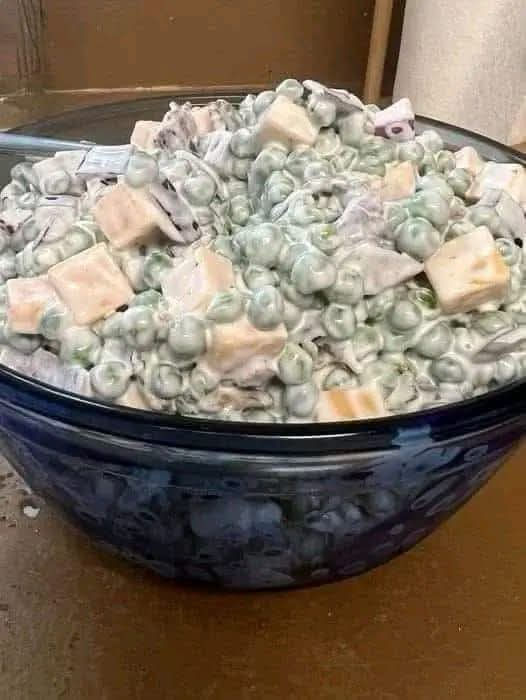
Sweet peas, crisp bacon, sharp cheddar, tangy red onion, all bound together in a creamy, slightly sweet dressing. It is the kind of salad that non-salad people eat. It is the kind of salad that disappears before the fancy kale salad has been touched. It is the kind of salad that people stand over at the buffet table, taking just one more scoop, pretending no one is watching.
If you are searching for easy potluck salads that feed a crowd on a budget, or if you need retro Midwestern recipes that never go out of style, this pea salad is your answer. It is the dish that proves simple is often best. It is the salad that will earn you requests for the recipe every single time.
The History of Pea Salad
Pea salad, like many great American dishes, emerged from the intersection of convenience and creativity. Canned peas became widely available in the late 19th century, and home cooks quickly discovered their versatility. By the 1920s and 30s, pea salads were appearing in community cookbooks across the country.
The creamy version—with mayonnaise, sour cream, or a combination—became particularly popular in the Midwest, where dairy is abundant and cold salads are a staple of potluck culture. The addition of cheese and bacon transformed it from a simple vegetable side into something more substantial, more satisfying, more likely to be requested again and again.
By the 1950s and 60s, pea salad was firmly established in the American potluck canon. It appeared alongside Jell-O salads, ambrosia, and macaroni salad on buffets from coast to coast. It was the dish that everyone’s grandmother made, the dish that tasted like summer gatherings and family reunions.
Today, pea salad is experiencing a quiet renaissance. A new generation has discovered its charms, appreciating its simplicity and its nostalgic appeal. It is the retro classic that refuses to fade away.
The Anatomy of Perfect Creamy Pea Salad
Great pea salad has five essential components, each playing a specific role.
The Peas: Sweet peas are the star. They provide sweetness, color, and a tender pop of texture. Frozen peas are superior to canned; they are brighter, firmer, and more flavorful. If you must use canned, drain them thoroughly.
The Bacon: Crispy, smoky, salty bacon provides crunch and savory depth. It is the counterpoint to the sweet peas and creamy dressing. Do not skimp on the bacon.
The Cheese: Sharp cheddar provides tangy, salty contrast. Its firm texture holds up in the creamy dressing. White cheddar is classic; orange cheddar adds visual contrast.
The Onion: Red onion adds sharp bite and color. Its pungency cuts through the richness of the dressing. If raw onion is too strong for you, soak the diced onion in cold water for 10 minutes before adding.
The Dressing: A creamy, slightly sweet dressing binds everything together. Mayonnaise provides richness. Sour cream adds tang. A touch of sugar balances the acidity. This is not the time for light or fat-free versions; the full-fat dressing is part of the experience.
The Ultimate Classic Creamy Pea Salad Recipe
Yield: 8-10 servings
Ingredients:
· 4 cups frozen peas (about 16-20 oz), thawed
· 8 slices thick-cut bacon, cooked crisp and crumbled
· 1 ½ cups sharp cheddar cheese, diced small or shredded
· ½ cup red onion, finely diced
· ¼ cup fresh parsley, chopped (optional)
For the Dressing:
· ¾ cup mayonnaise
· ¼ cup sour cream
· 1 tablespoon apple cider vinegar or white wine vinegar
· 1 tablespoon granulated sugar
· ½ teaspoon kosher salt
· ½ teaspoon black pepper
· Optional: ¼ teaspoon garlic powder
Instructions:
Thaw the Peas: Place the frozen peas in a colander and run under cool water until thawed. Drain thoroughly. Spread on a paper towel-lined baking sheet and pat dry. Excess moisture will make the dressing watery.
Cook the Bacon: Cook the bacon until crisp using your preferred method—skillet, oven, or microwave. Drain on paper towels, cool completely, and crumble or chop into bite-sized pieces.
Make the Dressing: In a small bowl, whisk together the mayonnaise, sour cream, vinegar, sugar, salt, pepper, and garlic powder until smooth and well combined. Taste and adjust seasoning.
Combine: In a large bowl, combine the thawed and dried peas, crumbled bacon, cheddar cheese, red onion, and parsley. Pour the dressing over the top.
Fold Gently: Fold the ingredients together gently but thoroughly until everything is evenly coated with dressing. Be careful not to mash the peas.
Chill: Cover and refrigerate for at least 2 hours, preferably 4 hours or overnight. This resting period allows the flavors to meld and the salad to chill thoroughly.
Serve: Give the salad a gentle stir before serving. Garnish with additional bacon, cheese, or parsley if desired. Serve cold.
The Pea Question: Frozen vs. Canned
This is the most important decision in pea salad.
Frozen Peas: Superior in every way. They are brighter, firmer, and more flavorful. They hold their shape better and provide a satisfying pop when bitten. Thaw them completely and pat them dry. Do not cook them; they are already blanched.
Canned Peas: Acceptable in a pinch but not ideal. They are softer, duller in color, and less sweet. If you use canned peas, choose a high-quality brand, drain them thoroughly, and rinse to remove excess sodium and canning liquid. Pat them very dry.
Fresh Peas: If you have access to fresh garden peas, blanch them briefly in boiling water, then shock in ice water. Drain and dry thoroughly. This is the peak-season luxury version.
The Bacon Selection
Bacon is the soul of this salad. Choose wisely.
Thick-Cut: Provides substantial, meaty pieces that hold their own against the other ingredients.
Hickory-Smoked: Classic smoky flavor that complements the sweet peas and tangy dressing.
Applewood-Smoked: Slightly sweeter, also excellent.
Turkey Bacon: If you must, but it lacks the fat and flavor that makes bacon bacon.
Cooking Method: Oven-baking is easiest for large quantities. Arrange strips on a parchment-lined baking sheet and bake at 400°F for 15-20 minutes until crisp. Drain on paper towels.
The Cheese Question
Sharp cheddar is classic, but variations are welcome.
Sharp Cheddar: Provides tangy, salty contrast. White cheddar is traditional; orange cheddar adds visual interest.
Extra Sharp Cheddar: Even bolder. Use if you love cheddar.
Colby Jack: Milder, creamier. Good for those who find cheddar too sharp.
Pepper Jack: Adds heat. Use if you want a spicy kick.
Swiss Cheese: Traditional in some variations. Its nutty flavor works surprisingly well.
Diced vs. Shredded: Diced cheese provides distinct pockets of cheesy goodness. Shredded cheese integrates more evenly. Both work; choose based on your preference.
The Onion Situation
Red onion is classic, but alternatives exist.
Red Onion: Sharp, colorful, traditional. Soak diced onion in cold water for 10 minutes to mellow the bite.
Sweet Onion: Vidalia or Walla Walla. Milder, sweeter. Good for onion-sensitive palates.
Green Onion: Milder still, with a fresh, grassy note. Use the white and light green parts.
Shallot: Delicate, subtle. A gourmet touch.
The Dressing Theology
The dressing is the glue that holds everything together. Get it right.
Mayonnaise: Full-fat, real mayonnaise is non-negotiable. Miracle Whip is too sweet and tangy. Light mayonnaise contains too much water and will make the dressing thin.
Sour Cream: Adds tang and lightens the richness of the mayo. Greek yogurt can substitute in a pinch.
Vinegar: Provides acidity that balances the richness. Apple cider vinegar adds slight fruitiness; white wine vinegar is cleaner.
Sugar: A small amount balances the acidity and enhances the sweetness of the peas. Do not skip it.
Seasoning: Salt and pepper are essential. Taste and adjust before chilling.
The Make-Ahead Advantage
Pea salad improves with rest. This is not a last-minute dish.
Minimum Chill: 2 hours. The flavors begin to meld, but the salad is still fresh.
Optimal Chill: 4-8 hours. The dressing has fully permeated the ingredients. The flavors are harmonious.
Overnight: Perfect. The salad is at its peak. The peas remain firm if you did not over-dress.
Maximum: 24-48 hours. Still delicious, though the peas may soften slightly and the bacon may lose some crunch.
The Flavor Universe: Infinite Pea Salad Variations
The classic is perfect. But variations are welcome.
Cheddar Bacon Ranch Pea Salad:
Replace the dressing with ranch dressing (homemade or bottled). Add an extra ¼ cup bacon. This is the maximum-indulgence version.
Southern Pea Salad:
Add ½ cup diced pimento peppers. Use extra sharp cheddar. This is pimento cheese meets pea salad.
Dill Pickle Pea Salad:
Add ½ cup finely chopped dill pickles. Add 1 tablespoon fresh dill. The pickle brine brightens everything.
Water Chestnut Pea Salad:
Add 1 can sliced water chestnuts, drained and chopped. They add incredible crunch without altering the flavor.
Cashew Pea Salad:
Add ½ cup roasted salted cashews just before serving. They add richness and crunch. Do not add them early or they will soften.
Mint Pea Salad:
Replace parsley with fresh mint. Add 2 tablespoons chopped fresh mint. This is bright, fresh, and unexpected.
Curried Pea Salad:
Add 1 teaspoon curry powder to the dressing. Add ¼ cup golden raisins. This is an intriguing variation.
The Serving Question
Pea salad is versatile. Here is how to serve it.
As a Side Dish: Classic potluck fare. Serve alongside grilled meats, sandwiches, or other salads.
As a Dip: Serve with crackers or sturdy chips. The creamy, chunky texture works beautifully as a dip.
On a Lettuce Leaf: For a more elegant presentation, serve a scoop of pea salad on a bed of butter lettuce.
In a Sandwich: Use as a filling for sandwiches or wraps. It is surprisingly delicious.
The Leftover Strategy
Leftover pea salad keeps well, with some caveats.
Refrigerator: Store in an airtight container for up to 3 days. The peas may soften slightly, and the bacon may lose some crunch, but the flavor remains excellent.
Do Not Freeze: The dressing will separate, and the peas will become mushy. Freezing is not recommended.
Refresh Leftovers: If the salad seems dry after refrigeration, stir in a spoonful of additional dressing or sour cream. If the bacon has softened, sprinkle fresh crumbled bacon on top before serving.
Troubleshooting: When Salads Go Wrong
The Salad Is Watery: You did not dry the peas thoroughly, or you used canned peas without draining them properly. Next time, pat the peas absolutely dry with paper towels. For this batch, drain excess liquid carefully and stir in additional cheese or bacon to absorb moisture.
The Salad Is Dry: You did not use enough dressing, or you used light mayonnaise that broke down. Next time, use full-fat ingredients and add dressing generously. For this batch, stir in additional dressing or sour cream.
The Dressing Is Too Thick: Add a tablespoon of milk or buttermilk and stir until smooth.
The Dressing Is Too Thin: Add more mayonnaise or sour cream, or let the salad chill longer; the dressing will thicken as it chills.
The Salad Is Bland: You under-seasoned the dressing, or your ingredients were low-quality. Next time, taste the dressing before adding and use sharp cheese and good bacon. For this batch, add salt, pepper, and a splash of vinegar.
The Bacon Is Soggy: You added it too early, or you did not drain it properly. Next time, add bacon just before serving, or reserve some to sprinkle on top. For this batch, sprinkle fresh crispy bacon over individual servings.
The Onion Overwhelms: You used too much onion, or your onion was very strong. Next time, reduce the amount or soak diced onion in cold water for 10 minutes before adding.
The Sentimental Salad
My grandmother made pea salad for every family reunion. Not this version—hers had canned peas, miracle whip, and chunks of velveeta. It was not gourmet. It was not sophisticated. It was what she had, what she could afford, what she knew her family would eat.
She would bring it in a Tupperware bowl, the kind with the green lid that everyone’s grandmother owned. She would set it on the picnic table next to the fried chicken and the potato salad and the baked beans. And by the end of the meal, the bowl would be empty, scraped clean by cousins and aunts and uncles who had been eating her pea salad their entire lives.
I did not appreciate it then. I was young. I thought food needed to be fancy to be good. I did not understand that the pea salad was not just pea salad. It was continuity. It was the dish she made because she always made it. It was the taste of family, of belonging, of being part of something that stretched back and forward through time.
Now I make my own version. Better peas. Real bacon. Sharp cheddar. Dressing from scratch. My grandmother would probably not recognize it. But she would recognize the spirit. She would recognize the bowl on the picnic table, the cousins reaching for seconds, the quiet satisfaction of feeding people you love.
That is the secret, I think. Not the perfect ratio of peas to bacon or the ideal chill time or the right brand of mayonnaise. The secret is that classic creamy pea salad is never really about the salad. It is about the reunions. It is about the tables where it appears. It is about the grandmothers who made it and the grandchildren who still make it.
It is about feeding people, simply and well, for generations.
Make this salad for the potluck. Make it for the family reunion. Make it for the backyard barbecue where you need something that everyone will eat. Make it because it is easy and cheap and people love it.
Make it because people like to eat.
And then sit at the table, watching your family scoop seconds onto their plates, watching the bowl empty, watching the conversation flow around the food, and know that you have done something ancient and good.
You have taken frozen peas and bacon and cheese and transformed them into a dish that carries memory. You have continued a tradition. You have fed the people in front of you.
That is not just cooking. That is the potluck gospel. That is the retro classic, alive and well.
Memorize this recipe. It will never let you down. It will carry you through summers and reunions and gatherings large and small.
It is the taste of sweet peas and smoky bacon and creamy dressing. It is the taste of family. It is ready whenever you are.
More Recipes You Might Like
-
Crock Pot Chicken And Noodles Belongs
The Ultimate Comfort: Why 4-Ingredient Crock Pot Chicken And Noodles Belongs in Your Weekly Rotation There is a specific, almost…
-
Carrot Cake Roll with Cream Cheese Frosting
The Swirl of Perfection: Why Carrot Cake Roll with Cream Cheese Frosting Is the Dessert That Steals the Show There…
-
LOADED CHEESY POCKET TACOS
The Handheld Fiesta: Why Loaded Cheesy Pocket Tacos Are the Dinner Revolution You Need There is a specific, almost primal…