

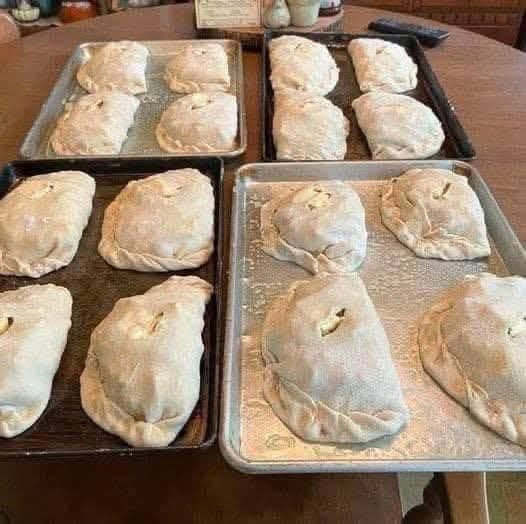
The Handheld Heritage: Why Savory Beef Cornish Pasties Deserve a Place in Your Kitchen
There is a specific, almost mystical quality to foods that were born of necessity. They carry within them the stories of the people who created them—the miners who needed a portable lunch, the wives who packed their tins, the generations who perfected a simple formula until it became something sacred.
The Cornish pasty is one of those foods.
For centuries, these hand-held pies sustained Cornish tin miners through long days underground. The crimped edge was not just decorative—it was a handle, meant to be held by dirty fingers and then discarded, ensuring the miners did not ingest the toxic arsenic that coated their hands. The filling was practical: beef, potato, onion, and swede (rutabaga), ingredients that were cheap, available, and hearty enough to fuel a day of hard labor.
Today, the pasty has transcended its working-class origins to become one of Britain’s most beloved exports. It appears in bakeries from Cornwall to California, from London to Tokyo. It is protected by law—only pasties made in Cornwall, following traditional methods, can legally be called “Cornish pasties.”
But you do not need to be in Cornwall to make them. You do not need a special license or generations of family knowledge. You need good beef, fresh vegetables, a sturdy pastry, and the willingness to crimp. That is all. That is everything.
Savory beef Cornish pasties are the ultimate hand-held meal. They are portable, satisfying, and deeply, profoundly comforting. They are perfect for lunch boxes, picnics, hiking trips, or simply a cold evening when you want something warm and savory wrapped in buttery pastry.
If you are searching for authentic British recipes that travel well, or if you need hand-held meat pies that satisfy like a full meal, these pasties are your answer. They are the proof that the simplest foods often have the richest histories. They are the taste of Cornwall, made in your own kitchen.
The History of the Cornish Pasty
The pasty’s story begins in Cornwall, the rugged southwestern peninsula of England. Tin mining was the region’s lifeblood for centuries, and miners needed food that could withstand hours underground. The pasty was the perfect solution: a complete meal, wrapped in sturdy pastry, easy to hold and eat with dirty hands.
The traditional filling was simple: beef, potato, onion, and swede. The beef provided protein and flavor. The potatoes and swede added bulk and nutrition. The onion added savoriness. The pastry was made with lard or suet, creating a sturdy crust that would not crumble in a miner’s pocket.
The crimped edge served a dual purpose. It sealed the pasty, keeping the filling inside. And it provided a handle—a thick, sturdy ridge that miners could hold while eating, then discard, ensuring they did not ingest the arsenic and other toxins that coated their hands.
Different fillings were said to indicate different parts of the mine. Some claim that miners would mark the corner of a pasty with an initial or a distinctive crimp, so they could identify their own lunch. Others say that pasties for wealthier miners contained meat at one end and fruit at the other—a dessert included in the same pastry.
Whatever the specifics, the pasty became synonymous with Cornwall. By the 19th century, it was being exported around the world by Cornish miners who took their culinary traditions with them. Today, you can find pasties in former mining towns across the United States, Australia, New Zealand, and South Africa.
In 2011, the Cornish pasty received Protected Geographical Indication status from the European Union. Only pasties made in Cornwall, following traditional methods, can legally be called “Cornish pasties.” But home cooks everywhere can make their own versions, honoring the tradition while adapting to local ingredients.
The Anatomy of Perfect Cornish Pasties
Great Cornish pasties have four essential components.
The Pastry: Sturdy enough to hold the filling, tender enough to be enjoyable. Traditional recipes use lard or suet for richness and structure. Butter works beautifully for a more tender crust.
The Filling: Beef, potato, onion, and swede (rutabaga) are the classic combination. The vegetables are sliced thinly, not diced, so they cook evenly inside the pastry. The beef is typically skirt or chuck, cut into small pieces.
The Seasoning: Salt and pepper are essential. Some recipes add thyme or parsley. The filling should be well-seasoned; the pastry is relatively plain.
The Crimp: The signature edge that seals the pasty and provides a handle. It takes practice to perfect, but even a rustic crimp is beautiful.
The Ultimate Savory Beef Cornish Pasty Recipe
Yield: 6 pasties
Ingredients:
For the Pastry:
· 3 cups all-purpose flour
· 1 teaspoon salt
· ¾ cup cold unsalted butter, cut into small cubes (or use ½ cup butter and ¼ cup lard or suet)
· ½ cup cold water (plus more as needed)
· 1 egg, beaten, for egg wash
For the Filling:
· 1 lb beef skirt, chuck, or sirloin, cut into ½-inch cubes
· 2 medium potatoes (Russet or Yukon Gold), peeled and thinly sliced (about ⅛ inch thick)
· 1 medium onion, finely chopped or thinly sliced
· 1 cup swede (rutabaga), peeled and thinly sliced (optional but traditional)
· 1 teaspoon salt
· ½ teaspoon black pepper
· 2 tablespoons fresh parsley, chopped (optional)
· 2 tablespoons butter, cut into small pieces (to dot on filling)
Instructions:
Phase One: The Pastry
Mix Dry Ingredients: In a large bowl, whisk together the flour and salt.
Cut in the Fat: Add the cold butter cubes (and lard/suet if using). Using a pastry blender, your fingertips, or a food processor, cut the fat into the flour until the mixture resembles coarse breadcrumbs with some pea-sized butter lumps remaining.
Add Water: Gradually add the cold water, stirring with a fork until the dough comes together. You may need slightly more or less water. The dough should be moist but not sticky.
Rest: Turn the dough out onto a lightly floured surface and bring it together into a ball. Divide into 6 equal portions, flatten into discs, wrap in plastic, and refrigerate for at least 30 minutes. This rest is essential for tender pastry.
Phase Two: The Filling
Prepare the Ingredients: While the dough chills, prepare all filling ingredients. The vegetables should be sliced thinly so they cook through during baking.
Combine: In a large bowl, combine the beef, potatoes, onion, swede (if using), salt, pepper, and parsley. Toss to mix evenly.
Phase Three: Assemble the Pasties
Preheat: Preheat your oven to 400°F (200°C). Line a large baking sheet with parchment paper.
Roll the Dough: On a lightly floured surface, roll each dough disc into a circle about 8-9 inches in diameter and about ⅛ inch thick. Do not stretch the dough; roll gently from the center outward.
Add the Filling: Place about 1 cup of the filling mixture on one half of each circle, leaving a ½-inch border around the edge. Dot the filling with a few small pieces of butter.
Crimp: Brush the edges of the pastry with water. Fold the empty half over the filling, pressing the edges together firmly. Starting at one end, crimp the edge by folding the pastry over itself in a rope-like pattern. Alternatively, press with a fork for a simpler seal. The crimp should be tight enough to hold in all the juices.
Vent: Cut a small slit in the top of each pasty to allow steam to escape.
Egg Wash: Place the pasties on the prepared baking sheet. Brush the tops with beaten egg wash for a golden, shiny finish.
Phase Four: Bake
Bake: Bake for 20 minutes. Reduce the oven temperature to 350°F (175°C) and bake for an additional 30-40 minutes, until the pastry is golden brown and the filling is cooked through. If the pasties are browning too quickly, tent loosely with foil.
Rest: Let the pasties cool on the baking sheet for 10-15 minutes before serving. They can be served warm or at room temperature.
Serve: Traditional accompaniments include HP sauce, brown sauce, or simply a dollop of good mustard. A side of baked beans is also classic.
The Pastry Fat Debate
Traditional Cornish pasties use lard or suet for the pastry. Here is what to know.
Lard: Rendered pork fat. Creates a flaky, tender crust with excellent flavor. Traditional.
Suet: Raw beef fat, shredded. Creates a very sturdy, rich pastry. Traditional for miners’ pasties.
Butter: Creates a more tender, flavorful crust. Less traditional but delicious. Many modern recipes use all butter.
Combination: Using half butter and half lard gives you the best of both worlds—flavor from butter, structure from lard.
All-Butter Version: Use ¾ cup cold butter. The pastry will be more tender and flavorful, but slightly less sturdy.
The Beef Selection
Beef is the heart of the filling. Choose wisely.
Skirt Steak: Traditional. Full of flavor, becomes tender with cooking. Cut into small pieces.
Chuck: Well-marbled, becomes tender. Good choice.
Sirloin: Leaner, still flavorful. Cut into small pieces.
Ground Beef: Not traditional. The texture is wrong. Use cubed beef for authentic pasties.
The Vegetable Quartet
The classic filling is a specific combination.
Potatoes: Russet or Yukon Gold, peeled and thinly sliced. They should cook through during baking.
Onion: Finely chopped or thinly sliced. Provides savoriness.
Swede (Rutabaga): The yellow root vegetable that is essential to authentic Cornish pasties. It adds sweetness and texture. If you cannot find it, substitute turnip or simply omit.
Parsley: Fresh parsley adds brightness. Optional but recommended.
The Crimp Tutorial
The crimp is the signature of a Cornish pasty. Here is how to do it.
Traditional Crimp: Starting at one end, fold the edge of the pastry over itself, pressing firmly. Continue along the edge, creating a rope-like pattern. This takes practice but is satisfying once mastered.
Fork Crimp: Press the edges together with a fork. This is easier and still effective. Not traditional but perfectly acceptable.
Simple Fold: Press the edges together firmly with your fingers. This is the simplest method. The pasty will still be delicious.
Function: The crimp should be tight enough to hold in the juices. A loose crimp leads to leaks.
The Flavor Universe: Endless Pasty Variations
The classic is perfect. But variations are traditional in different regions.
Lamb and Mint Pasties:
Substitute lamb for beef. Add 2 tablespoons fresh mint, chopped. This is a delicious variation.
Chicken and Leek Pasties:
Use diced chicken instead of beef. Add sliced leeks instead of onion. Use thyme instead of parsley. This is a classic British combination.
Cheese and Onion Pasties:
Omit the beef. Use extra onion and add 1 cup grated sharp cheddar. This is the vegetarian version.
Steak and Stilton Pasties:
Use beef. Add ½ cup crumbled Stilton cheese to the filling. This is decadent.
Curried Beef Pasties:
Add 1 tablespoon curry powder to the filling. This reflects the Indian influence on British cuisine.
Breakfast Pasties:
Fill with sausage, bacon, egg, and potato. This is a full English breakfast in a pasty.
The Serving Question
How to serve Cornish pasties? Here are the options.
Warm: Fresh from the oven, with a side of HP sauce or brown sauce. This is the classic.
Room Temperature: Traditional for packed lunches. Pasties are delicious cold.
With Baked Beans: A British classic. Serve with a side of baked beans for dipping.
With Salad: A simple green salad balances the richness.
With Pickles: Branston pickle or pickled onions are traditional accompaniments.
The Make-Ahead Advantage
Pasties are designed for make-ahead convenience.
Assemble, Refrigerate: Assemble the pasties completely, place on a baking sheet, cover, and refrigerate for up to 24 hours. Bake as directed.
Assemble, Freeze: Assemble the pasties on a baking sheet, freeze until solid, then transfer to freezer bags. Bake from frozen, adding 15-20 minutes to the baking time.
Bake, Then Freeze: Baked pasties freeze beautifully. Cool completely, wrap individually, and freeze. Reheat in a 350°F oven for 15-20 minutes.
The Lunch Box Hero
Pasties are the ultimate packed lunch. Here is why.
Portable: They are self-contained. No need for containers or utensils.
Sturdy: They hold up well in a lunch bag. No squishing.
Delicious Cold or Hot: They are excellent at room temperature, so no need to reheat.
Complete Meal: Protein, starch, vegetables—all in one hand-held package.
The Leftover Strategy
Leftovers are a gift. Here is how to use them.
Pasty and Peas: Serve leftover pasty with a side of mushy peas for a classic British meal.
Pasty Ploughman’s: Serve with cheese, pickles, and crusty bread for a ploughman’s lunch.
Pasty Soup: Crumble leftover pasty into hot beef broth for a quick soup.
Pasty Breakfast: Slice leftover pasty and fry in butter until crisp. Top with a fried egg.
Troubleshooting: When Pasties Go Wrong
The Pastry Is Tough: You overworked the dough, or you used too much water. Next time, handle gently and add water gradually.
The Pastry Is Soggy: You did not seal the edges properly, or your filling was too wet. Next time, crimp tightly and ensure vegetables are sliced thinly.
The Filling Is Undercooked: Your vegetable slices were too thick, or you did not bake long enough. Next time, slice thinly and ensure full baking time.
The Pasties Leaked: Your crimp was not tight enough. Next time, seal edges more firmly and ensure the crimp is secure.
The Pasties Are Pale: You did not use egg wash, or your oven temperature was too low. Next time, brush generously and verify oven temperature.
The Pasties Burned on the Bottom: Your baking sheet was too dark, or your oven runs hot. Next time, use a lighter pan and check earlier.
The Sentimental Pasty
My grandfather worked in the coal mines of Pennsylvania for forty years. Not tin mines, not Cornwall, but the same kind of hard, dangerous, underground labor. He never talked about it much. He never complained. He just went to work every day and came home every night, black with coal dust, too tired to do much more than eat and sleep.
He did not eat pasties. He ate whatever my grandmother put in front of him—meatloaf, potatoes, gravy, the hearty food of working-class America. But when I learned about the Cornish miners and their pasties, I thought of him. I thought of all those men, in all those mines, eating whatever their wives packed for them, sustaining themselves through long days underground.
The pasty is not just a food. It is a tribute to working people everywhere—to the miners and laborers who built our world with their hands, who needed food that could travel, that could sustain, that could be eaten with dirty fingers and then discarded.
When I make pasties, I think of them. I think of my grandfather. I think of all the unnamed miners who carried these hand pies in their lunch pails, who ate them in the dark, who came home at night to families who loved them.
That is the secret, I think. Not the perfect crimp or the traditional filling or the right ratio of butter to lard. The secret is that savory beef Cornish pasties are never really about the pasties. They are about the people who made them and the people who ate them. They are about the miners who needed portable food and the wives who provided it. They are about the generations of working people who sustained themselves with simple, hearty food.
They are about feeding people, the way they have always been fed.
Make these pasties for a packed lunch. Make them for a picnic. Make them for a cold evening when you want something warm and savory wrapped in pastry. Make them because they are portable and satisfying and deeply, profoundly comforting.
Make them because people like to eat.
And then sit at the table, biting into that golden pastry, tasting the beef and potatoes and onions, feeling the history in every bite, and know that you have done something ancient and good.
You have taken flour and butter and beef and vegetables and transformed them into a tradition. You have created a meal that miners would recognize. You have fed the people in front of you.
That is not just cooking. That is the handheld heritage. That is the taste of Cornwall, made anywhere.
Memorize this recipe. It will never let you down. It will carry you through packed lunches and picnics and moments when you need a complete meal in your hand.
It is the taste of beef and potatoes and buttery pastry. It is the taste of working people, honored. It is ready whenever you are.
More Recipes You Might Like
-
Crock Pot Chicken And Noodles Belongs
The Ultimate Comfort: Why 4-Ingredient Crock Pot Chicken And Noodles Belongs in Your Weekly Rotation There is a specific, almost…
-
Carrot Cake Roll with Cream Cheese Frosting
The Swirl of Perfection: Why Carrot Cake Roll with Cream Cheese Frosting Is the Dessert That Steals the Show There…
-

LOADED CHEESY POCKET TACOS
The Handheld Fiesta: Why Loaded Cheesy Pocket Tacos Are the Dinner Revolution You Need There is a specific, almost primal…