

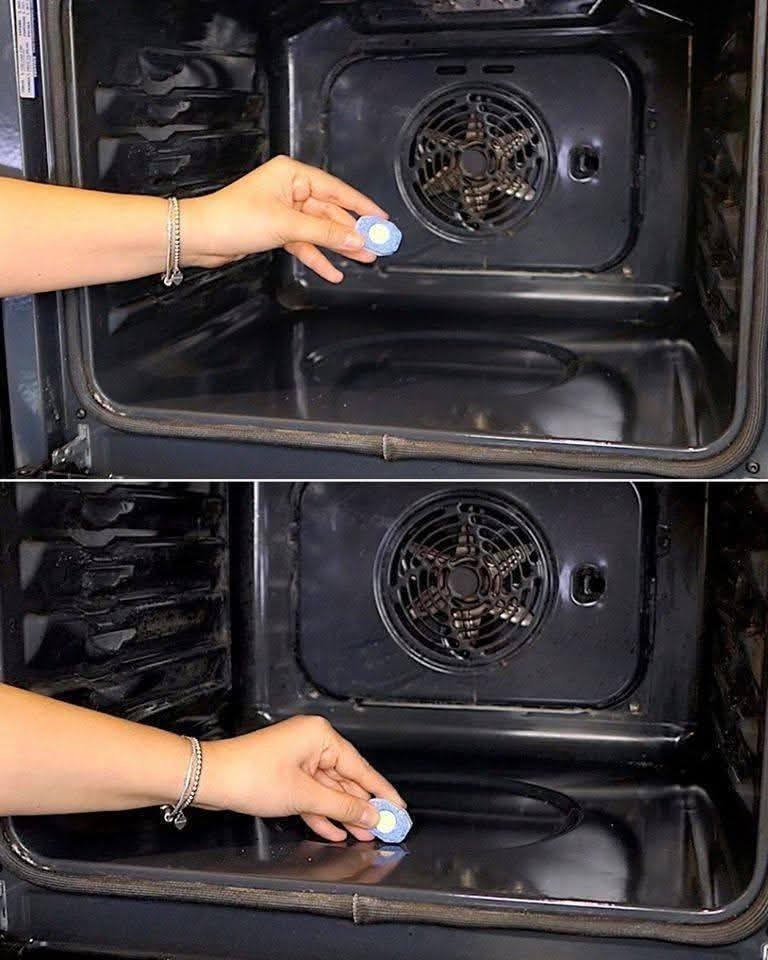
That bold claim has taken over social media: “All you need is a dishwasher tablet! The oven will be like new again!” It promises a sparkling clean oven without the harsh chemical smells, expensive products, or strenuous scrubbing. But does this viral life hack for cleaning actually deliver, or is it a recipe for damage? Let’s separate the hype from the reality, explore the science behind the hack, and provide a safe, step-by-step guide if you choose to try it.
Why the Hack Seems Plausible: The Science of Dishwasher Tablets
Dishwasher tablets are powerful little chemists. They contain a blend of ingredients designed to tackle tough, baked-on grease and food residue:
· Surfactants: Break down grease and grime.
· Alkaline Salts (like sodium carbonate): Attack and dissolve fatty acids and proteins.
· Bleaching Agents: Help with stain removal.
· Enzymes: Target specific types of food stains.
In theory, these ingredients should work on oven grease. The problem? Ovens and dishwashers are very different environments. Dishwasher chemicals are designed for porcelain, stainless steel, and plastics in a contained, water-rinsed system. Ovens have different coatings, insulation, and components that these chemicals weren’t tested for.
The Crucial Warning: Potential Risks and Damage
Before you grab a tablet, understand the potential downsides. This hack is controversial among cleaning professionals and appliance manufacturers.
Can Damage Oven Coatings: Most modern ovens have a specific catalytic, pyrolytic, or enamel coating on the interior. The abrasive and chemical nature of a dishwasher tablet can scratch, dull, or degrade this coating over time, making it harder to clean in the future and potentially reducing efficiency.
Fume Hazard: When heated, the chemicals in the tablet can release strong, potentially irritating fumes. These are not meant to be inhaled in an open kitchen environment. Proper ventilation is absolutely critical.
Risk to Heating Elements & Sensors: Getting the abrasive paste on exposed heating elements (especially the bottom bake element) or temperature sensors could cause damage. It’s difficult to fully rinse all residue away.
Voiding Warranty: Using an unapproved cleaning method could void your oven’s warranty if damage occurs.
Bottom Line: While many have used this hack without issue, it carries inherent risks. It is NOT recommended for self-cleaning ovens, ovens with continuous cleaning coatings, or by manufacturers. Proceed with extreme caution.
If You Proceed: A Safer, Step-by-Step Method Using a Dishwasher Tablet
If you have an older, basic oven and are willing to accept the risks, this method is safer than the “just scrub with a tablet” video.
You Will Need:
· 1 dishwasher tablet (basic, non-gel type)
· Heat-proof gloves
· A bowl of hot water
· Microfiber cloths or non-abrasive sponges
· A plastic scraper or old credit card (for tough spots)
· Vinegar (for final rinse – optional)
Instructions:
VENTILATE, VENTILATE, VENTILATE: Open all kitchen windows and turn on the exhaust fan at full power. This is the most important step.
Remove Racks & Debris: Take out all oven racks and trays. Wipe out any loose crumbs or debris with a dry cloth.
Pre-Soften Grime (CRUCIAL): Place an oven-safe bowl of boiling water on the bottom rack. Close the oven door and let the steam work for 15-20 minutes. This will loosen grease significantly.
Prepare the Tablet Solution: DO NOT USE THE TABLET DRY. Wearing gloves, wet the dishwasher tablet in your bowl of hot water and rub it between your hands to create a thick, pasty lather. You can also crush it slightly into the hot water.
Apply & Soak: Using a cloth or sponge, apply the thick sudsy paste liberally to the oven’s interior walls, floor, and door. Avoid direct contact with heating elements. Focus on greasy areas. Let the paste sit and work for no more than 15-20 minutes. Do not let it dry out completely.
Scrub Gently: With a non-abrasive sponge or cloth, scrub the surfaces. Use the plastic scraper for stubborn, lifted grease spots. Do not use steel wool or abrasive pads.
Rinse Thoroughly (THE KEY STEP): Dampen a clean cloth with fresh hot water and wipe away all the paste residue. Change your rinsing water frequently. You must remove all chemical traces. A final wipe with a 50/50 water and white vinegar solution can help neutralize any alkaline residue.
Dry Completely: Use a dry microfiber cloth to wipe the interior dry.
Clean Racks Separately: Soak the racks in a sink with hot water, dish soap, and ½ cup of baking soda or a dishwasher tablet. Scrub clean, rinse, and dry.
Air Out: Leave the oven door open for several hours in the ventilated room to ensure all moisture and any lingering odors are gone.
Safer, Recommended Alternatives for an “Oven Like New”
For a guaranteed safe clean, consider these proven oven cleaning methods:
The Baking Soda & Vinegar Paste (The Champion Natural Cleaner):
· Make a paste with ½ cup baking soda and a few tablespoons of water.
· Apply it to the cool oven interior (avoiding elements), let it sit overnight.
· The next day, spray or wipe with vinegar to activate the fizz, then scrub and wipe clean with water. This is effective, non-toxic, and safe for coatings.
Commercial Oven Cleaner (Follow Instructions!):
· Products like Easy-Off are specifically formulated for ovens. They are very effective but contain strong chemicals (lye). Always wear gloves and ventilate the area. Follow the label instructions precisely, especially regarding contact time and rinsing.
Your Oven’s Self-Cleaning Function:
· This is the function designed by the manufacturer. It incinerates grime at extremely high heat. Ensure your kitchen is ventilated, remove racks, and wipe out ash residue after the cycle is complete and the oven is fully cooled.
Final Verdict
The dishwasher tablet hack can work as a powerful degreaser for tough spots, but it is not a miracle solution and comes with notable risks. It should be considered an occasional, at-your-own-risk spot treatment for heavily soiled, non-coated oven surfaces, not a routine cleaning method.
For consistent, safe results that protect your appliance investment, stick with manufacturer-recommended methods: the self-clean cycle, commercial cleaners designed for ovens, or the trusted baking soda and vinegar paste.
Your oven is a major appliance. While the allure of a quick, cheap hack is strong, protecting its longevity and your safety is worth the extra care. Choose the method that gives you peace of mind along with a clean oven.
More Recipes You Might Like
-

Complete Recipe for Dulce
Introduction Dulce is a wonderfully rich and creamy sweet treat with a smooth texture and comforting caramel-like flavor. This simple dessert is perfect for satisfying a sweet craving, serving after dinner, or sharing with family and friends. Its combination of milk, sugar, and vanilla creates a classic homemade flavor that feels both nostalgic and indulgent.…
-

Savory Sausage & Cream Cheese
Introduction Savory Sausage & Cream Cheese is a rich, creamy, and satisfying dish that combines seasoned sausage with smooth cream cheese for an easy comfort-food favorite. It is simple enough for a busy weeknight while being flavorful enough for breakfast, brunch, or a casual gathering. Origin This recipe is inspired by the American tradition of…
-

Chicago Spaghetti
Introduction Chicago Spaghetti is a comforting, hearty pasta dish that brings together tender spaghetti, flavorful ground beef, tomato sauce, and plenty of melted cheese. It is an easy family-style meal that is satisfying, budget-friendly, and perfect for busy weeknights. Origin Despite its name, Chicago Spaghetti is not a single officially defined traditional dish from Chicago.…