

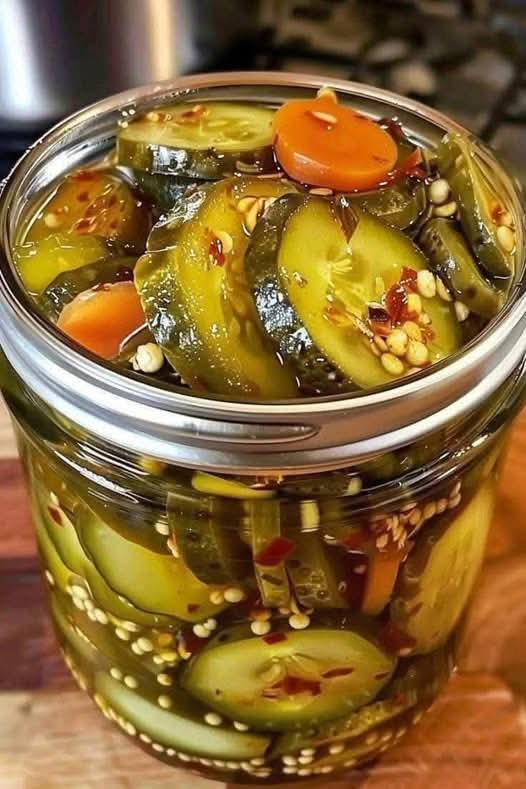
Crunchy, tangy, garlicky, and just the right amount of sweet—these quick pickled cucumbers are everything you want in a pickle. No canning experience required, no special equipment, and ready in under an hour. Once you taste homemade, you’ll never go back to store-bought.
There are pickles, and then there are homemade pickled cucumbers. The kind that snap when you bite into them. The kind where the brine is perfectly balanced—sour, salty, sweet, and aromatic all at once. The kind you eat straight from the jar at midnight, standing in front of the open fridge.
This is that recipe.
Whether you’re a fermentation novice, a gardener with a cucumber surplus, or simply someone who appreciates a perfect pickle on a burger, sandwich, or cheese board, this recipe delivers. It’s quick, customizable, and absolutely foolproof. No water bath canning required (though we’ll cover that, too). Just crisp cucumbers, a fragrant brine, and a few hours of patience.
Why These Pickles Are Better Than Anything From a Jar
· Unbeatable Crunch: Store-bought pickles are often heated during processing, which softens them. These are cold-packed or lightly brined, preserving that perfect snap.
· Customizable Flavor: You control the garlic, the dill, the heat, the sweetness. Want extra spicy? Go for it. Prefer bread and butter? Easy.
· No Canning Experience Needed: This is a refrigerator pickle recipe—no sterilizing, no water baths, no sealing failures. Just mix, pour, and wait.
· Ready in Hours: While fermented pickles take weeks, these are ready in as little as 1 hour (though 24 is better).
· Endlessly Adaptable: Use the same brine for onions, carrots, green beans, or radishes.
Ingredient Spotlight: The Anatomy of a Perfect Pickle
The Cucumbers:
Use fresh, firm, unwaxed cucumbers. Kirby cucumbers (pickling cucumbers) are ideal—they’re small, bumpy, and stay crunchy. English cucumbers work well too. Avoid regular waxed supermarket cucumbers; the wax prevents brine absorption.
The Vinegar:
White distilled vinegar gives a clean, sharp tang. Apple cider vinegar adds fruity complexity. Rice vinegar is milder and sweeter. You can use a combination.
The Water:
Cold water is essential if you’re doing a quick pour-over method. Hot brine cooks the cucumbers slightly; cold brine keeps them maximally crunchy.
The Salt:
Pickling salt or kosher salt (no iodine, no anti-caking agents). Iodized salt can make brine cloudy and affect flavor.
The Sweetener:
Granulated sugar balances the acidity. For bread and butter pickles, you’ll use more. For classic dill, just a touch.
The Aromatics:
· Fresh dill (or dill seed) – non-negotiable for dill pickles
· Garlic – smashed cloves release more flavor
· Black peppercorns – adds gentle heat
· Mustard seeds – classic pickling spice
· Red pepper flakes or fresh chili – for heat
· Bay leaf – earthy depth
Classic Crispy Refrigerator Dill Pickles Recipe
Prep Time: 15 minutes | Chill Time: 24 hours (minimum 1 hour) | Total Time: 24 hours 15 minutes | Yield: 1 quart jar
Ingredients:
For the Brine:
· 1 cup water
· 1 cup white distilled vinegar (or apple cider vinegar)
· 1 tablespoon kosher salt (or pickling salt)
· 1 tablespoon granulated sugar
For the Jar:
· 1 pound small pickling cucumbers (Kirby), washed and dried
· 2-3 cloves garlic, peeled and smashed
· 2-3 sprigs fresh dill (or 1 tablespoon dill seed)
· 1 teaspoon black peppercorns
· 1 teaspoon mustard seeds
· ½ teaspoon red pepper flakes (optional, for heat)
· 1 bay leaf (optional)
Step-by-Step Instructions:
Prepare the Cucumbers:
Scrub the cucumbers gently to remove any dirt. Trim off the blossom end (the end opposite the stem)—it contains enzymes that can make pickles soft. Slice as desired:
· Spears: Cut lengthwise into quarters or sixths
· Chips: Slice into ¼-inch rounds
· Whole: Leave small cucumbers intact
Pack the Jar:
Place the garlic, dill, peppercorns, mustard seeds, red pepper flakes, and bay leaf in the bottom of a clean 1-quart glass jar (or divide between two pint jars). Pack the cucumbers tightly into the jar, leaving about ½ inch of headspace at the top.
Make the Brine:
In a small saucepan, combine the water, vinegar, salt, and sugar. Bring to a boil, stirring to dissolve the salt and sugar. Remove from heat immediately and let cool for 5 minutes.
For extra-crunchy pickles, use cold brine instead—simply whisk cold water and vinegar with salt and sugar until dissolved, skipping the heat entirely.
Pour and Seal:
Pour the brine over the cucumbers, covering them completely. If needed, top off with additional water/vinegar (1:1 ratio). Tap the jar gently to release air bubbles. Add more brine if necessary.
Refrigerate and Wait:
Screw on the lid and place the jar in the refrigerator. Wait at least 1 hour before tasting, but 24 hours is ideal for fully developed flavor. The pickles will keep for up to 1 month in the refrigerator.
Pro-Tips for the Crispiest, Most Flavorful Pickles
· Ice Water Bath: For maximum crunch, soak cucumber slices in ice water for 30-60 minutes before pickling. This firms them up dramatically.
· Remove the Blossom End: Always trim off the very end of the cucumber. It contains enzymes that cause softening.
· Use Pickling Salt: Table salt contains anti-caking agents that can make brine cloudy. Kosher salt or pickling salt is best.
· Don’t Overcrowd: Pack cucumbers tightly but not so tightly that they’re crushed. They need some room for brine circulation.
· Weight Them Down: If cucumber pieces float above the brine, use a glass fermentation weight or a small zip-top bag filled with water to keep them submerged.
· Patience is Flavor: The pickles taste good after an hour. They taste incredible after 24-48 hours. They taste transcendent after 1 week (if you can wait that long).
Endless Variations: Make Them Your Own
Bread & Butter Pickles (Sweet & Tangy):
Increase sugar to ¾ cup. Add 1 sliced onion and 1 teaspoon celery seeds. Slice cucumbers thinly. Proceed as directed.
Spicy Garlic Pickles:
Double the garlic and red pepper flakes. Add 1-2 sliced jalapeños or 1 teaspoon cayenne to the jar.
Classic Kosher-Style Dill:
Use kosher salt (naturally), plenty of fresh dill, and 4-6 whole black peppercorns. Add 1 coriander seed and 1 allspice berry for complexity.
Sweet Heat Pickles:
Combine the bread & butter sugar level with 2-3 sliced habaneros or Thai chilies. Unforgettably good.
No-Sugar Pickles:
Omit the sugar entirely or substitute with 1 tablespoon honey or maple syrup (dissolved in warm brine).
Pickled Red Onions (Same Method):
Substitute 1 large red onion, thinly sliced. Ready in 1 hour. Perfect for tacos, sandwiches, and salads.
Canning for Long-Term Storage
While this recipe is designed for refrigerator pickles (which are not shelf-stable), you can water bath can them for pantry storage.
For shelf-stable canned pickles:
Use a tested recipe with proper vinegar-to-water ratio (at least 50% vinegar).
Sterilize jars and lids.
Pack jars, pour hot brine, wipe rims, apply lids.
Process in a boiling water bath:
· Pint jars: 10 minutes (adjust for altitude)
· Quart jars: 15 minutes
Important: Do not alter vinegar, water, or salt ratios for canning. Safety depends on proper acidity.
Storage & Shelf Life
· Refrigerator Pickles: Store in the fridge for 3-4 weeks. The pickles will gradually soften over time but remain delicious.
· Fermented Pickles: A different process (lacto-fermentation) yields shelf-stable, probiotic-rich pickles. That’s a separate recipe, but worth exploring!
· Canned Pickles: Store in a cool, dark pantry for up to 1 year. Refrigerate after opening.
Frequently Asked Questions (FAQ)
Q: Why are my pickles soft and limp?
A: Several possible reasons:
· You used waxed supermarket cucumbers
· You didn’t remove the blossom end
· You used too much vinegar or too little salt
· You poured boiling brine over very thin slices (try cold brine next time)
· You waited too long to eat them (they soften with time)
Q: Can I reuse the brine?
A: Yes, for refrigerator pickles only. The brine will be diluted after one batch and may not be as strong. Add a little fresh vinegar and salt before reusing. Discard after 2 uses.
Q: Do I need to sterilize jars for refrigerator pickles?
A: No. A clean jar from the dishwasher or washed with hot soapy water is sufficient. Sterilization is only necessary for canning.
Q: Can I use other vegetables?
A: Absolutely! This brine works beautifully for:
· Pickled carrots (slice thin)
· Pickled green beans
· Pickled radishes
· Pickled jalapeños
· Pickled okra
· Pickled cauliflower
Q: My brine is cloudy. Is that safe?
A: Yes. Cloudiness can come from:
· Minerals in water (use filtered water next time)
· Salt (table salt causes cloudiness; pickling salt prevents it)
· Fermentation (if you accidentally made fermented pickles—still safe!)
If there’s no mold, off-smells, or sliminess, they’re fine.
Q: Can I reduce the salt?
A: Salt is essential for food safety and texture. Reducing salt significantly can lead to spoilage and soft pickles. For low-sodium diets, enjoy them quickly and keep refrigerated.
Serving Suggestions: More Than Just a Sandwich Topper
· Classic Burger or Hot Dog: The crunch and tang cut through rich meat.
· Charcuterie Board: Cornichons are fancy; homemade dilly beans and pickle spears are even better.
· Potato Salad: Chopped pickles add essential acidity and crunch.
· Bloody Mary: Use a pickle spear as the garnish. Drink the brine as a chaser (yes, people do this).
· Fried Pickles: Bread and fry pickle chips. Serve with ranch. Life-changing.
· Tuna or Chicken Salad: Finely chopped pickles add moisture and brightness.
· Deviled Eggs: Top with a tiny piece of pickled jalapeño or dill pickle.
Troubleshooting: What Went Wrong?
Problem Likely Cause Solution
Soft, limp pickles Blossom end not removed; waxed cucumbers; hot brine Trim ends; use pickling cucumbers; try cold brine
Too salty Too much salt; brine too concentrated Next time reduce salt slightly; add more vinegar
Not tangy enough Not enough vinegar; too much water Use 1:1 vinegar-to-water ratio
Mold on top Cucumbers exposed to air Ensure all vegetables are submerged; use a weight
Bitter pickles Cucumber variety; overripe cucumbers Use pickling cucumbers; taste-test before pickling
Conclusion: The Pickle Recipe You’ll Use Forever
Perfect pickled cucumbers are not complicated. They don’t require heirloom recipes or generations of pickling wisdom. They just require good cucumbers, a balanced brine, and a little patience.
This recipe is your starting point—and probably your ending point. It’s the one you’ll memorize. The one you’ll make every summer when cucumbers are overflowing at the farmers market. The one you’ll text to friends who ask, “How do you make those pickles?”
Make a jar today. Taste one in an hour. Taste another tomorrow. You’ll never go back.
Now, we’d love to see your pickles! Did you add a secret spice? Go heavy on the garlic? Share your photos and tag us. And for more preserving, pickling, and canning recipes, be sure to explore the blog.
P.S. Don’t lose this recipe! Pin it to your “Canning & Preserving” or “Garden Recipes” board immediately. This is the one you’ll come back to every single harvest season.
More Recipes You Might Like
-

Complete Recipe for Dulce
Introduction Dulce is a wonderfully rich and creamy sweet treat with a smooth texture and comforting caramel-like flavor. This simple dessert is perfect for satisfying a sweet craving, serving after dinner, or sharing with family and friends. Its combination of milk, sugar, and vanilla creates a classic homemade flavor that feels both nostalgic and indulgent.…
-

Savory Sausage & Cream Cheese
Introduction Savory Sausage & Cream Cheese is a rich, creamy, and satisfying dish that combines seasoned sausage with smooth cream cheese for an easy comfort-food favorite. It is simple enough for a busy weeknight while being flavorful enough for breakfast, brunch, or a casual gathering. Origin This recipe is inspired by the American tradition of…
-

Chicago Spaghetti
Introduction Chicago Spaghetti is a comforting, hearty pasta dish that brings together tender spaghetti, flavorful ground beef, tomato sauce, and plenty of melted cheese. It is an easy family-style meal that is satisfying, budget-friendly, and perfect for busy weeknights. Origin Despite its name, Chicago Spaghetti is not a single officially defined traditional dish from Chicago.…