

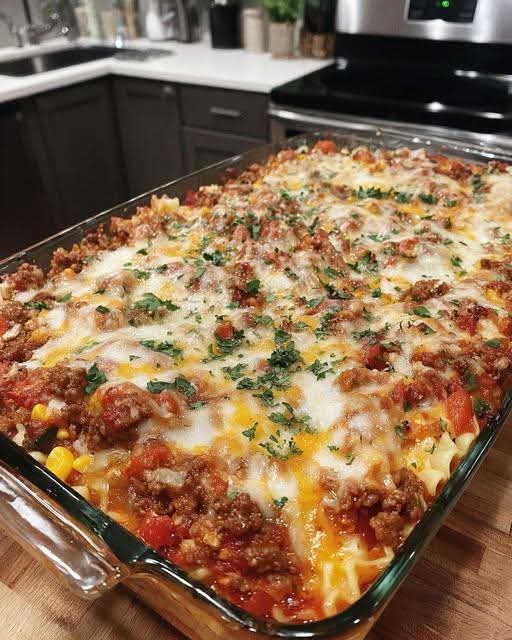
There is a specific, quiet dignity to the casserole dish. It arrives at the table unheralded, unassuming, its contents bubbling beneath a golden crust of cheese or a buttery blanket of breadcrumbs. It does not demand attention. It does not require last-minute fussing or elaborate plating. It simply sits there, radiating warmth, waiting to be scooped onto plates and into the grateful bellies of people who have had a long day and need something that feels like a hug.
Ground beef casserole is the platonic ideal of this genre. It is the workhorse of the weeknight kitchen, the hero of the potluck, the answer to the eternal question: “What can I make with a pound of ground beef, some pantry staples, and absolutely no energy to cook?”
This is not a single recipe. This is a thousand recipes, united by a common DNA. Ground beef. A starch. A sauce. Cheese. Bake until bubbly. Serve with a side of something green, or don’t, because the casserole already contains everything you need.
It is forgiving. It is flexible. It is frugal. And when executed correctly, it is profoundly, soul-nourishingly delicious.
If you are searching for easy weeknight casseroles that feed a crowd on a budget, or if you need family-friendly ground beef dinners that children actually eat without negotiation, this is your starting point. This is the canonical ground beef casserole—the version that lives in the collective memory, the one your mother made, the one you will make for your own children, the one that never goes out of style.
The Architecture of the Casserole
A great ground beef casserole is not merely ingredients thrown into a dish and baked. It is a carefully constructed layering of flavors and textures, each component playing a specific role.
The Meat: Ground beef provides richness, savoriness, and protein. It must be browned properly—not steamed, not gray, but deeply caramelized in spots. This browning is called the Maillard reaction, and it is the source of beefy, savory depth. Do not crowd the pan. Do not rush.
The Aromatics: Onion and garlic are non-negotiable. They provide the savory foundation upon which everything else builds. Celery, bell pepper, and mushrooms are welcome additions.
The Starch: Pasta, rice, potatoes, or even tortillas provide bulk and texture. The starch absorbs the sauce and becomes tender, creating the satisfying, spoonable quality that defines a great casserole.
The Sauce: Tomato-based, cream-based, or broth-based. The sauce provides moisture and cohesion. It must be flavorful enough to season the entire dish but not so thin that the casserole becomes soupy.
The Cheese: Melted cheese provides richness, flavor, and that irresistible golden crust. Cheddar is the classic. Monterey Jack adds creaminess. Parmesan adds salt and nuttiness. A blend is ideal.
The Topping: Breadcrumbs, crushed crackers, or additional cheese create textural contrast. A great topping is crisp and golden, providing a counterpoint to the tender interior.
The Ultimate Ground Beef Casserole Recipe
This is the master recipe. Memorize it, then adapt it to your pantry, your preferences, and your people.
Yield: 8 servings
Ingredients:
For the Filling:
· 2 tablespoons olive oil
· 1 ½ pounds ground beef (80/20 for flavor)
· 1 large yellow onion, diced
· 3 cloves garlic, minced
· 1 green bell pepper, diced (optional)
· 8 oz mushrooms, sliced (optional)
· 1 teaspoon kosher salt
· ½ teaspoon black pepper
· 1 teaspoon dried oregano
· 1 teaspoon dried basil
· ½ teaspoon red pepper flakes (optional)
· 2 tablespoons tomato paste
· 1 can (15 oz) tomato sauce
· 1 can (14.5 oz) diced tomatoes, undrained
· 8 oz uncooked pasta (elbow macaroni, rotini, or penne)
For the Cheese Layer:
· 1 cup ricotta cheese or small-curd cottage cheese
· 1 large egg
· ¼ cup grated Parmesan cheese
· 2 cups shredded mozzarella cheese
For the Topping:
· 1 cup shredded cheddar cheese
· ¼ cup grated Parmesan cheese
· Optional: ½ cup panko breadcrumbs tossed with 1 tablespoon melted butter
Instructions:
Phase One: The Meat Sauce
Preheat: Preheat your oven to 375°F (190°C). Grease a 9×13-inch baking dish.
Brown the Beef: Heat the olive oil in a large skillet or Dutch oven over medium-high heat. Add the ground beef and cook, breaking it up with a spoon, until deeply browned and cooked through, about 8-10 minutes. Do not stir constantly; let it sit and develop color. Use a slotted spoon to transfer the beef to a plate, leaving the fat in the pan.
Cook the Aromatics: Add the onion, bell pepper, and mushrooms to the skillet. Cook over medium heat, stirring occasionally, until softened, about 5-7 minutes. Add the garlic and cook for 1 minute more.
Build the Sauce: Return the beef to the skillet. Add the salt, pepper, oregano, basil, and red pepper flakes. Stir in the tomato paste and cook for 1-2 minutes until darkened and fragrant. Add the tomato sauce and diced tomatoes with their juices. Bring to a simmer, then reduce heat to low and simmer while you prepare the pasta.
Phase Two: The Pasta
Cook the Pasta: Bring a large pot of salted water to a boil. Add the pasta and cook for 2-3 minutes less than the package directions. It should be undercooked and very firm, as it will continue cooking in the oven. Drain well.
Combine: Add the undercooked pasta to the meat sauce and stir to combine. The pasta will absorb some of the sauce as it bakes.
Phase Three: The Cheese Layer
Mix: In a small bowl, combine the ricotta, egg, and ¼ cup Parmesan cheese. Mix until smooth.
Phase Four: The Assembly
First Layer: Spread half of the pasta-meat mixture in the prepared baking dish.
Second Layer: Dollop the ricotta mixture over the pasta and spread gently. Sprinkle with 1 cup of the mozzarella cheese.
Third Layer: Top with the remaining pasta-meat mixture.
Final Layer: Sprinkle with the remaining 1 cup mozzarella, the shredded cheddar, and the additional Parmesan. If using breadcrumbs, sprinkle them over the cheese.
Phase Five: The Bake
Cover and Bake: Cover the dish with foil and bake for 20 minutes.
Uncover and Brown: Remove the foil and bake for an additional 15-20 minutes, until the casserole is bubbly and the cheese is golden brown and melted.
Rest: Let the casserole rest for 10-15 minutes before serving. This allows the liquids to settle and the casserole to set, making it easier to serve.
Serve: Scoop onto plates and serve with a side salad or steamed vegetables.
The Ground Beef Selection
Not all ground beef is created equal. The fat content matters.
80/20: Ideal for casseroles. The fat provides flavor and moisture. It will be rendered during browning and much of it drained or absorbed by the other ingredients. Do not drain all the fat; some carries flavor into the sauce.
85/15: Acceptable. Leaner, slightly less flavorful. You may need to add a tablespoon of olive oil when cooking the aromatics.
90/10: Too lean. The beef will be dry and crumbly. If this is what you have, add 2 tablespoons of olive oil and consider adding a splash of beef broth to the sauce for moisture.
93/7 or higher: Do not use. You are making diet food, not comfort food. Save it for burgers.
The Pasta Selection Seminar
The pasta shape matters more than you might think.
Elbow Macaroni: The classic. The curves trap sauce. The size is perfect for scooping.
Rotini or Fusilli: The spirals hold sauce in their crevices. Excellent texture.
Penne or Ziti: Tubular shapes work well. The sauce fills the tubes. Cut ziti is ideal.
Shells: Medium shells capture sauce and cheese in their cups. Whimsical and effective.
Orzo: Too small. It becomes mushy and compacts into a dense layer.
Lasagna Noodles: This recipe becomes baked ziti with different noodles. Use broken lasagna sheets for a rustic variation.
The Sauce Philosophy
The sauce is the soul of the casserole. It must be flavorful enough to season the pasta and beef, but not so thin that the casserole becomes soupy.
Tomato Sauce Base: Provides acidity and brightness. Balances the richness of the beef and cheese.
Diced Tomatoes: Add texture and visual interest. Crush them slightly with your spoon if you prefer a smoother sauce.
Tomato Paste: Concentrated umami. Always cook it for 1-2 minutes after adding to the pan. This caramelizes the sugars and deepens the flavor.
Herbs: Dried herbs are traditional and convenient. Oregano and basil are the canonical pair. Fresh herbs, added at the end, provide brightness.
The Cheese Layer Theology
The ricotta layer is what elevates this casserole from a simple pasta bake to something special. It provides creamy pockets of tangy richness that contrast with the tomato sauce and the melted cheese topping.
Ricotta: Traditional. Whole milk ricotta is creamiest. Part-skim works but is less luxurious.
Cottage Cheese: A common substitution. Use small-curd and drain any excess liquid. It provides a similar creamy texture with slightly more tang.
The Egg: Binds the cheese layer and prevents it from becoming watery. Do not skip it.
Parmesan: Adds salt and nuttiness. Freshly grated is infinitely better than the canned stuff.
The Topping Debate
The topping is the final flourish, the textural contrast, the promise of what lies beneath.
All Cheese: Simple, classic, effective. A blend of mozzarella and cheddar provides melt and flavor.
Breadcrumbs: Panko breadcrumbs tossed with melted butter create a crisp, golden crust. Add Parmesan to the breadcrumbs for extra flavor.
Crushed Crackers: Ritz crackers or buttery crackers, crushed and sprinkled over the cheese, create a nostalgic, diner-style topping.
French Fried Onions: The canned ones. Sprinkle them over the top during the last 5 minutes of baking for a crunchy, savory crust. This is the green bean casserole crossover.
The Flavor Universe: Infinite Ground Beef Casserole Variations
The master recipe is a template. Here are nine distinct variations that reimagine the ground beef casserole entirely.
Cheesy Taco Casserole:
Replace the Italian herbs with 2 tablespoons taco seasoning. Use salsa instead of tomato sauce. Add a can of drained black beans and a can of drained corn to the meat mixture. Use pepper jack and cheddar. Top with crushed tortilla chips. Serve with sour cream, avocado, and fresh cilantro. This is taco night, deconstructed and baked.
Shepherd’s Pie Casserole (Cottage Pie):
Omit the pasta and Italian ingredients. Brown the beef with onions, carrots, peas, and corn. Add 2 tablespoons flour, then 1 cup beef broth and 1 tablespoon Worcestershire sauce. Simmer until thickened. Transfer to a baking dish and top with 4 cups mashed potatoes. Bake until bubbly and the potatoes are golden. This is British comfort food, Americanized and perfect.
Southwest Enchilada Casserole:
Brown the beef with onions and garlic. Add 1 can enchilada sauce, 1 can diced green chiles, and 1 teaspoon cumin. Layer in a baking dish with corn tortillas, shredded cheese, and the meat mixture. Top with more cheese and bake. This is enchiladas without the rolling.
Stuffed Pepper Casserole:
Brown the beef with onions and garlic. Add diced bell peppers (use a mix of colors), 1 can diced tomatoes, 1 cup cooked rice, and Italian herbs. Top with cheese and bake. This is stuffed peppers, deconstructed and simplified.
Hamburger Helper, Homemade:
Brown the beef with onions. Add 4 cups beef broth, 1 can tomato sauce, 1 tablespoon Worcestershire, and 8 oz elbow macaroni. Simmer until pasta is tender. Stir in 1 cup cheddar cheese until melted. Transfer to a baking dish, top with more cheese, and broil until bubbly. This is the boxed dinner, elevated.
Greek Moussaka Casserole:
Brown the beef with onions and garlic. Add 1 can crushed tomatoes, 1 teaspoon cinnamon, 1 teaspoon oregano, and salt. Layer in a baking dish with sliced eggplant that has been salted, rinsed, and pan-fried. Top with a béchamel sauce (butter, flour, milk, nutmeg, and Parmesan) and bake. This is the Greek classic, simplified.
Italian Sausage and Beef Casserole:
Use 1 pound ground beef and ½ pound Italian sausage, casings removed. Proceed with the master recipe but add 1 teaspoon fennel seeds to the meat mixture. Use provolone or fontina in addition to mozzarella. This is the extra-meat, extra-flavor version.
Cheeseburger Casserole:
Brown the beef with onions and garlic. Add 1 can tomato soup, ¼ cup ketchup, 2 tablespoons mustard, and 1 tablespoon Worcestershire. Stir in cooked elbow macaroni. Top with cheddar cheese and dill pickle slices. Bake until bubbly. This is the flavors of a cheeseburger, translated to a spoon.
Low-Carb Ground Beef Casserole:
Omit the pasta. Use cauliflower rice or riced broccoli instead. Increase the vegetables. Use a cream-based sauce (cream cheese, sour cream, and cheddar) rather than tomato sauce. This is keto-friendly and surprisingly satisfying.
The Make-Ahead Advantage
Ground beef casserole is not merely tolerant of advance preparation; it often benefits from it.
Fully Assemble, Refrigerate: Assemble the casserole completely, but do not bake. Cover tightly and refrigerate for up to 24 hours. Add 10-15 minutes to the baking time, as you are starting from cold.
Fully Assemble, Freeze: Assemble in a disposable foil pan or a freezer-safe baking dish. Wrap tightly in plastic wrap, then foil. Freeze for up to 3 months. Thaw overnight in the refrigerator before baking. Bake as directed, adding 15-20 minutes.
Bake, Then Freeze: Bake the casserole completely, cool completely, then wrap and freeze. Reheat, covered, at 350°F until hot throughout, about 30-40 minutes. This is ideal for meal prep.
The Leftover Strategy
Leftover casserole is a gift. Here is how to use it.
Reheat: Individual portions reheat beautifully in the microwave. For larger portions, reheat in a 350°F oven, covered, until hot.
Casserole Stuffed Peppers: Scoop the filling into halved bell peppers. Top with cheese and bake until peppers are tender.
Casserole Quesadillas: Spread filling between two tortillas with extra cheese. Pan-fry until golden and melted. Serve with sour cream and salsa.
Casserole Stuffed Baked Potatoes: Split baked potatoes and fill with reheated casserole. Top with cheese and broil briefly.
The Side Dish Question
What to serve with ground beef casserole? The casserole is a complete meal, but a simple side provides contrast.
Green Salad: A simple salad with a bright vinaigrette cuts through the richness.
Roasted Vegetables: Broccoli, asparagus, or green beans, roasted with olive oil and salt.
Garlic Bread: For sopping up every last bit of sauce.
Steamed Broccoli: Simple, classic, always welcome.
The Vegetable Integration Strategy
Hiding vegetables in ground beef casserole is the parent’s secret weapon. Here is how to do it without detection.
Grate Them: Grated zucchini, carrot, or yellow squash virtually disappear into the meat sauce. Sauté them with the onions to remove excess moisture.
Puree Them: Puree a can of diced tomatoes with a cup of cooked carrots or bell peppers. The sauce turns orange, but the flavor is masked by tomato and cheese.
Chop Them Fine: Finely chop mushrooms and cook them with the beef. They absorb meat flavor and add umami without texture complaints.
Layer Them: Slice zucchini or summer squash thinly and layer it in the casserole. The cheese and sauce mask the vegetable flavor.
Troubleshooting: When Casseroles Go Wrong
The Casserole Is Watery: Your pasta was not undercooked enough, your vegetables released too much moisture, or you did not drain your tomatoes. Next time, cook pasta 2-3 minutes less than directed, sauté vegetables thoroughly to evaporate moisture, and drain diced tomatoes slightly before adding.
The Casserole Is Dry: You used too-lean beef, overbaked it, or did not use enough sauce. Next time, use 80/20 beef, cover with foil for most of the baking time, and ensure your sauce is generous.
The Pasta Is Mushy: You overcooked the pasta before baking, or you baked too long. Next time, undercook the pasta significantly. It will finish cooking in the oven.
The Cheese Is Greasy: You used pre-shredded cheese coated in anti-caking agents, or your oven temperature was too high. Next time, grate your own cheese and bake at the recommended temperature.
The Casserole Is Bland: You under-seasoned the meat, or you did not brown it sufficiently. Next time, season generously and develop deep color on the beef. Taste the sauce before assembling and adjust seasoning.
The Topping Burned: Your oven runs hot, or you left it uncovered too long. Next time, cover with foil for the first 20 minutes, then uncover and watch carefully.
The Sentimental Casserole
My mother made ground beef casserole every Tuesday. Not because Tuesday was special, but because Tuesday was Tuesday, and Tuesday required dinner, and ground beef was affordable, and the recipe lived in her head without needing to be consulted. She used elbow macaroni, canned tomato sauce, dried herbs from a set she received as a wedding gift in 1978, and shredded cheddar from a bag. She topped it with crushed Ritz crackers because that was what her mother did.
I did not appreciate it then. I wanted pizza. I wanted fast food. I wanted anything other than the same casserole, again, on a Tuesday, in our kitchen with the peeling linoleum and the humming refrigerator.
Now I understand. The casserole was not about the casserole. It was about Tuesday. It was about the guarantee that at 6:00 PM, regardless of how the day had gone, regardless of grades or fights or disappointments, there would be dinner. There would be something warm and filling and made by hands that loved us.
That is the secret, I think. Not the perfect ratio of beef to pasta or the ideal cheese blend or the precise bake time. The secret is that ground beef casserole is never really about the recipe. It is about the rhythm of the week. It is about the knowledge that you can feed your people without stress, without drama, without a trip to the grocery store for obscure ingredients.
It is about Tuesday.
Make this casserole for your family on a Tuesday. Make it for the potluck where you need to feed a crowd on a budget. Make it for the new parents down the street who need a meal they can reheat between feedings. Make it for yourself on a night when you need to remember that you are capable of creating warmth and abundance from humble ingredients.
Make it because it is forgiving and flexible and everyone loves it.
Make it because people like to eat.
And then sit at the table, watching your people scoop seconds onto their plates, watching the casserole dish empty, watching the conversation flow around the food, and know that you have done something ancient and good.
You have taken a pound of ground beef, some pasta, some tomatoes, some cheese, and transformed them into comfort. You have created a Tuesday night that feels, for a moment, like something more than just another Tuesday.
That is not just cooking. That is the rhythm of the week. That is the guarantee of warmth. That is the one-dish wonder, passed down through generations, adapted to every pantry, faithful to every cook.
Memorize this recipe. It will never let you down. It will carry you through busy weeks and tight budgets and moments when you need to feed people without fuss.
It is the taste of Tuesday night. It is the taste of home. It is ready whenever you are.
More Recipes You Might Like
-
Fresh Apple Cranberry Pecan Salad
Introduction Fresh Apple Cranberry Pecan Salad is a crisp, colorful, and refreshing dish that combines sweet apples, tart cranberries, crunchy pecans, and a creamy, lightly sweet dressing. It is easy to prepare and works beautifully as a side dish, light lunch, or festive addition to a holiday table. Origin This salad is inspired by American-style…
-
Honey Garlic Glazed Chicken Wings
Introduction Honey Garlic Glazed Chicken Wings are a delicious combination of crispy chicken wings coated in a sweet, savory, and garlicky glaze. The caramelized honey creates a beautiful glossy finish, while garlic and seasonings add depth and flavor. They are perfect for family dinners, game-day gatherings, parties, or a satisfying appetizer. Origin Honey garlic is…
-

Crispy Meat and Herb
Introduction Crispy Meat and Herb is a hearty, flavorful dish that combines tender, well-seasoned meat with a deliciously crisp exterior and fragrant herbs. It is easy to prepare and makes a satisfying main course for family dinners, gatherings, or weekend meals. Origin Crispy meat dishes appear in many culinary traditions around the world, where browning…