

There is a specific, transcendent moment that occurs in diners across the American South around 7:00 AM. A plate appears at the counter, bearing two golden, split biscuits, their craggy tops slightly toasted. And then, the gravy ladle descends.
What follows is not merely breakfast. It is a baptism. A cascade of creamy, peppery, sausage-studded gravy flows over the biscuits, pooling at the edges, seeping into every crevice. The recipient picks up a fork, cuts through the biscuits and gravy together, and lifts a perfect, dripping bite to their mouth. They close their eyes. They sigh. The day has begun.
Sausage gravy is the South’s gift to morning. It is the reason biscuits were invented. It is the dish that proves, once and for all, that breakfast can be savory, substantial, and deeply satisfying without a single pancake or piece of fruit in sight.
And yet, for something so simple, it is so often done wrong. Pale, pasty, floury gravy. Greasy, slick, separated gravy. Gravy that tastes of nothing but salt. Gravy that has never met a generous amount of black pepper. These are the tragedies of the breakfast table.
This is not that gravy.
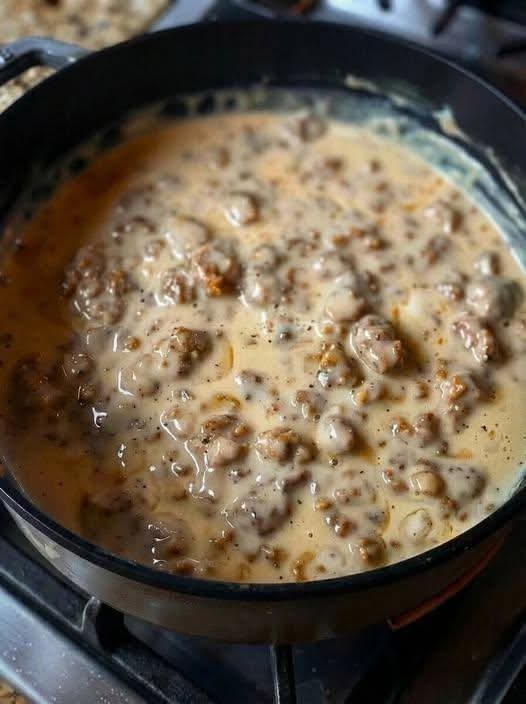
This is the real thing. The gravy that clings to the biscuits rather than running off them. The gravy that tastes unmistakably of sagey, fennel-laced pork sausage. The gravy that is creamy but not heavy, rich but not greasy, peppery but not punishing. This is the gravy that will have your family hovering near the stove, forks at the ready, before the biscuits are even out of the oven.
If you are searching for classic Southern breakfast recipes that define the genre, or if you need easy homemade gravy that transforms simple biscuits into a legendary meal, this is your recipe. This is the gravy that earned its place in the canon. This is the gravy that will make you a breakfast hero.
The History of the Gravy
Sausage gravy is a dish born of necessity and ingenuity, like so many great Southern foods. It emerged in the post-Civil War South, where resources were scarce and cooks had to stretch limited ingredients to feed large families. Breakfast was often the most important meal of the day for laborers and farmers who needed sustained energy for hours of physical work.
Biscuits were cheap and filling, made from flour, butter, and milk. But they were dry. They needed something to moisten them, to make them slip down easier, to turn them into a complete meal.
The solution was gravy. Milk, flour, and the drippings from whatever pork was available—salt pork, bacon, or, when they could afford it, sausage. The result was a hearty, satisfying, energy-dense meal that could be on the table in minutes.
Sausage gravy, specifically, became the premium version. When you had sausage, you had something special. The rendered fat from the sausage provided the foundation for the roux. The crumbled sausage provided protein and flavor. The milk transformed it all into a creamy, luxurious sauce.
It has remained a Southern staple ever sense, spreading across the country wherever people need a hearty breakfast to start their day.
The Anatomy of Perfect Sausage Gravy
Great sausage gravy is not complicated, but it requires attention to four critical elements.
The Sausage: Not all breakfast sausage is created equal. You need fatty, flavorful, well-seasoned sausage. The fat renders during cooking and becomes the foundation of your gravy. Lean sausage produces dry, flavorless gravy. Bulk breakfast sausage is ideal; if you only have links, remove the casings.
The Roux: The flour must be cooked in the sausage fat long enough to lose its raw taste but not so long that it browns significantly. A blonde roux is what you want—cooked just until it smells nutty and toasty, about 2-3 minutes.
The Milk: Whole milk provides the richest, creamiest gravy. Two percent works but produces a thinner result. Skim milk should be avoided. The milk must be added gradually, whisking constantly to prevent lumps.
The Seasoning: Black pepper is not optional. Sausage gravy should be generously, assertively peppered. It should have a noticeable kick that cuts through the richness. Salt is also essential, but remember that sausage is already salty; taste before adding more.
The Ultimate Sausage Gravy Recipe
Yield: Enough for 8-10 biscuits (4-6 hungry people)
Ingredients:
· 1 pound bulk breakfast sausage (regular or spicy)
· ¼ cup all-purpose flour
· 2 ½ to 3 cups whole milk, warmed
· 1 teaspoon freshly ground black pepper (plus more to taste)
· ½ teaspoon kosher salt (or to taste)
· Pinch of cayenne pepper (optional)
· Pinch of nutmeg (optional, but transformative)
Instructions:
Brown the Sausage: In a large skillet or cast-iron pan over medium-high heat, add the sausage. Cook, breaking it up with a wooden spoon or spatula, until deeply browned and cooked through, about 8-10 minutes. Do not rush this step. The browning creates flavor. The sausage should have crispy, caramelized bits.
Do Not Drain: This is critical. The rendered fat is essential for the roux. If your sausage is exceptionally fatty (more than about 2 tablespoons of fat), you can spoon out a little, but leave at least 2-3 tablespoons in the pan.
Add the Flour: Reduce the heat to medium. Sprinkle the flour evenly over the sausage and fat. Stir constantly for 2-3 minutes, until the flour is fully incorporated and has lost its raw smell. The mixture will be pasty and cling to the sausage. This is correct.
Add the Milk Gradually: Slowly pour in about ½ cup of the warm milk, whisking constantly. The mixture will seize up and become very thick. Keep whisking and add another ½ cup. Continue adding milk gradually, whisking constantly, until you have added 2 ½ cups. The gravy will thin as you add milk, then thicken as it simmers.
Simmer: Bring the gravy to a gentle simmer, then reduce heat to low. Cook for 5-10 minutes, stirring occasionally, until the gravy has thickened to your desired consistency. It should coat the back of a spoon.
Season: Add the black pepper, salt, cayenne, and nutmeg. Taste and adjust. The gravy should be boldly seasoned. Add more pepper if needed.
Adjust Consistency: If the gravy becomes too thick, add more warm milk, a tablespoon at a time, until it reaches the desired consistency. If it is too thin, simmer a few minutes longer.
Serve Immediately: Spoon generously over split, warm biscuits. Serve with eggs, bacon, or simply on its own.
The Sausage Selection Seminar
The sausage is the soul of this gravy. Choose wisely.
Plain Breakfast Sausage: The classic. Sage and black pepper are the dominant seasonings. Jimmy Dean is the standard for a reason, but local butcher sausage is even better.
Hot Breakfast Sausage: Adds red pepper heat. Use this if you want a spicy gravy. You can also mix hot and mild.
Maple Breakfast Sausage: Sweet and savory. Creates a different flavor profile but is delicious. Reduce or omit the added salt if using maple sausage.
Italian Sausage: Not traditional but delicious. Use sweet or hot Italian sausage, remove from casings. The fennel adds a different dimension.
Homemade Sausage Seasoning: If you have bulk ground pork, you can make your own. Mix 1 pound ground pork with 1 teaspoon salt, 1 teaspoon sage, 1 teaspoon black pepper, ½ teaspoon thyme, ½ teaspoon marjoram, and a pinch of red pepper flakes. Let rest overnight for best flavor.
The Milk Fat Debate
Whole milk is the standard. But variations exist.
Whole Milk: Rich, creamy, traditional. Provides the perfect balance of fat and liquid.
Half-and-Half: Creates an exceptionally rich, decadent gravy. Use half whole milk and half half-and-half for a compromise.
Heavy Cream: Too rich. The gravy becomes overwhelmingly heavy. Dilute with milk.
Evaporated Milk: Some Southern cooks swear by it. It provides a slightly caramelized, concentrated dairy flavor. Not traditional but delicious.
Two Percent: Acceptable but thinner. You may need to reduce the milk slightly or simmer longer to achieve proper thickness.
Skim Milk: Do not use. The gravy will be thin and watery, lacking the fat needed for proper texture and flavor.
The Biscuit Pairing
Sausage gravy demands a worthy partner. The biscuits must be sturdy enough to hold the gravy without disintegrating, tender enough to yield to a fork, and craggy enough to catch every bit of sausage and pepper.
Buttermilk Biscuits: The classic. Tangy, flaky, tender. The slight acidity cuts through the richness of the gravy.
Drop Biscuits: Even easier. No rolling, no cutting. Just drop and bake. The craggy tops catch extra gravy.
Frozen Biscuits: In a pinch, they work. Bake until deeply golden. They are not the same, but they are acceptable.
**The Gravy Consistency Spectrum
How thick should sausage gravy be? This is a matter of personal preference and regional variation.
Diner-Style: Thick enough to coat the back of a spoon heavily. It mounds slightly on the biscuit rather than running off. This is the most common style.
Country-Style: Thinner, more saucy. It pools around the biscuits rather than sitting on top. This is traditional in some regions.
The Test: Draw a line through the gravy on the back of your spoon. If the line holds and the gravy does not immediately run back together, it is thick enough.
The Pepper Question
Black pepper is not optional. It is essential. But how much?
The Minimum: 1 teaspoon per pound of sausage. This provides noticeable pepper flavor without overwhelming.
The Southern Standard: 1 tablespoon per pound of sausage. This is bold, assertive, traditional. The gravy should have visible black specks and a definite peppery kick.
The Maximum: 2 tablespoons per pound. This is for pepper lovers only. The gravy will be aggressively spicy.
Always use freshly ground black pepper. Pre-ground pepper lacks the aromatic punch of freshly cracked peppercorns.
The Make-Ahead Myth
Sausage gravy is best served immediately, but it can be made ahead with careful handling.
Refrigerate: Gravy thickens significantly when cold. Reheat gently over low heat, adding warm milk or water to thin it to the desired consistency. Whisk constantly to smooth out lumps.
Freeze: Sausage gravy freezes reasonably well. Cool completely, transfer to freezer containers, and freeze for up to 3 months. Thaw overnight in the refrigerator. Reheat gently, adding milk as needed.
The Reheating Ritual: Never microwave gravy. The microwave heats unevenly and can cause the gravy to break. Reheat on the stovetop over low heat, whisking constantly.
The Flavor Universe: Infinite Gravy Variations
The classic is perfect. But variations abound.
Spicy Sausage Gravy:
Use hot breakfast sausage. Add ½ teaspoon cayenne pepper with the black pepper. Add a diced jalapeño (seeded if you want less heat) when browning the sausage. This is for those who like morning heat.
Sage Sausage Gravy:
Add 1 teaspoon dried sage (or 1 tablespoon fresh, chopped) with the flour. Sage and sausage are a classic pairing. This version emphasizes the herbal notes.
Cream Cheese Sausage Gravy:
After the gravy has thickened, whisk in 4 ounces of softened cream cheese until smooth. This creates an exceptionally rich, tangy, luxurious gravy. Inspired by the Philadelphia brand that has graced so many of our recipes.
Mushroom and Sausage Gravy:
Add 8 oz sliced mushrooms when browning the sausage. Cook until they release their liquid and it evaporates, then proceed. This adds earthiness and stretches the gravy further.
Onion and Garlic Sausage Gravy:
Add ½ cup finely diced onion when browning the sausage. Cook until softened. Add 2 cloves minced garlic with the flour. This adds depth and savoriness.
Green Chile Sausage Gravy:
Add 1 can (4 oz) diced green chiles after browning the sausage. Proceed with the recipe. The green chiles add mild heat and bright, vegetal flavor. This is the New Mexico variation.
Bacon Sausage Gravy:
Use half breakfast sausage and half finely chopped bacon. Cook together until bacon is crisp and sausage is browned. Proceed. The smoky bacon adds another layer of flavor.
The Biscuit and Gravy Platter
When serving biscuits and gravy, consider the full plate.
Classic Plate: Split biscuit, smothered in gravy. Served with scrambled eggs and a side of bacon or sausage patties.
Country Plate: Biscuits and gravy with country fried steak, eggs, and hash browns. This is the heart attack special, and it is glorious.
Vegetarian Option: Serve gravy over biscuits with a side of roasted vegetables or a simple salad. Not traditional, but satisfying.
The Gravy for Dinner
Biscuits and gravy are not exclusively breakfast. They make a satisfying dinner.
Chicken Fried Steak: Top chicken fried steak with sausage gravy instead of the usual white gravy. This is decadent and delicious.
Open-Faced Sandwich: Serve gravy over toast or an open-faced biscuit with a fried egg on top. This is lunch.
Breakfast for Dinner: The classic. Biscuits, gravy, eggs, bacon. It is always a good idea.
Troubleshooting: When Gravy Goes Wrong
The Gravy Is Lumpy: You added the milk too quickly or did not whisk constantly. Next time, add milk gradually and whisk vigorously. For this batch, whisk vigorously or use an immersion blender to smooth out lumps.
The Gravy Is Too Thin: You did not cook the roux long enough, or you added too much milk. Next time, cook the flour mixture for a full 2-3 minutes and use less milk. For this batch, simmer longer to reduce, or whisk in a slurry of 1 tablespoon flour mixed with 2 tablespoons cold water.
The Gravy Is Too Thick: You added too much flour or not enough milk. Next time, measure carefully. For this batch, whisk in warm milk, a tablespoon at a time, until it reaches the desired consistency.
The Gravy Tastes Like Flour: You did not cook the roux long enough. The raw flour taste is unmistakable. Next time, cook the flour mixture for a full 2-3 minutes until it smells nutty and toasty.
The Gravy Is Greasy: Your sausage was too fatty, or you did not incorporate the fat into the roux properly. Next time, spoon off excess fat before adding flour, leaving about 2-3 tablespoons. For this batch, skim excess grease from the surface with a spoon.
The Gravy Is Bland: You under-seasoned. Next time, be generous with salt and especially pepper. For this batch, add more salt, pepper, and a dash of hot sauce.
The Gravy Broke (Separated): You overheated it or added cold milk too quickly. Next time, use warm milk and maintain gentle heat. For this batch, whisk in a tablespoon of cold water or milk and whisk vigorously over low heat to re-emulsify.
The Sentimental Gravy
My grandfather made sausage gravy every Saturday morning. Not because he was a cook—he was not. He was a coal miner who retired with black lung and a pension, and Saturdays were his domain. He would rise at 5:00 AM, before anyone else, and stand at the stove in his flannel robe, making gravy.
He used Jimmy Dean sausage, the regular kind, and whole milk from a glass bottle delivered by a dairy that no longer exists. He added pepper until the gravy was visibly speckled, more than anyone else in the family preferred. He served it over Pillsbury Grands biscuits, the kind that came in a tube and required you to whack the counter with the cardboard.
I did not appreciate it then. I was a teenager who slept until noon, who rolled my eyes at his 7:00 AM summons, who ate the gravy quickly and retreated back to my room. I did not understand that those Saturday mornings were finite. That the man standing at the stove would not always be there. That the gravy was not just gravy.
He died when I was nineteen. I did not get to say goodbye. I did not get to thank him for the Saturdays.
The first time I made sausage gravy myself, I was twenty-five, living in an apartment far from home, missing my family with an ache that surprised me. I bought Jimmy Dean sausage and Pillsbury biscuits and whole milk. I stood at my own stove in my own flannel robe and made the gravy.
It was not as good as his. It was too thick, or too thin, or not peppery enough. But it was close. And when I took that first bite, I closed my eyes and I was sixteen again, sitting at his kitchen table, watching him shuffle around in his robe, feeling safe and fed and loved.
That is the secret, I think. Not the perfect ratio of fat to flour or the precise pepper quantity or the ideal consistency. The secret is that sausage gravy is never really about the gravy. It is about Saturday mornings. It is about the people who stood at the stove before us. It is about the tradition passed down through generations, changing slightly with each cook but remaining essentially, unmistakably the same.
It is about being fed by hands that love you.
Make this gravy for your family on a Saturday morning. Make it for the people you love who need to feel cared for. Make it for yourself on a morning when you need to remember where you came from. Make it because it is simple and satisfying and deeply, fundamentally comforting.
Make it because people like to eat.
And then sit at the table, watching your family dip biscuits into gravy, watching the conversation flow, watching the morning unfold, and know that you have done something ancient and good.
You have taken sausage and milk and flour and transformed them into love. You have created a Saturday morning that will live in someone’s memory for decades. You have continued a tradition that stretches back through generations of cooks who stood at stoves just like yours.
That is not just cooking. That is continuity. That is the taste of home.
Memorize this recipe. It will never let you down. It will carry you through cold mornings and hard times and moments when you need to feel connected to something larger than yourself.
It is the taste of Saturday. It is the taste of love. It is ready whenever you are.
More Recipes You Might Like
-

Fresh Apple Cranberry Pecan Salad
Introduction Fresh Apple Cranberry Pecan Salad is a crisp, colorful, and refreshing dish that combines sweet apples, tart cranberries, crunchy pecans, and a creamy, lightly sweet dressing. It is easy to prepare and works beautifully as a side dish, light lunch, or festive addition to a holiday table. Origin This salad is inspired by American-style…
-

Honey Garlic Glazed Chicken Wings
Introduction Honey Garlic Glazed Chicken Wings are a delicious combination of crispy chicken wings coated in a sweet, savory, and garlicky glaze. The caramelized honey creates a beautiful glossy finish, while garlic and seasonings add depth and flavor. They are perfect for family dinners, game-day gatherings, parties, or a satisfying appetizer. Origin Honey garlic is…
-

Crispy Meat and Herb
Introduction Crispy Meat and Herb is a hearty, flavorful dish that combines tender, well-seasoned meat with a deliciously crisp exterior and fragrant herbs. It is easy to prepare and makes a satisfying main course for family dinners, gatherings, or weekend meals. Origin Crispy meat dishes appear in many culinary traditions around the world, where browning…