

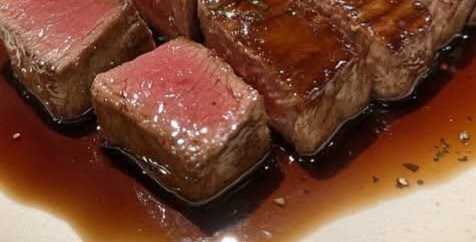
The Red Juice in a Rare Steak
Introduction
When you cut into a rare steak, you may notice a red or pink liquid that looks like blood. Despite its appearance, it is not blood. The reddish color mainly comes from water mixed with myoglobin, a protein found in muscle tissue that stores oxygen. Understanding this helps explain why a perfectly cooked rare steak can release a red-colored juice.
Origin
The idea of serving steak rare has a long history in European and Western culinary traditions, where high-quality beef was often cooked quickly over intense heat. This method preserves the meat’s tenderness and allows the center to remain red or pink.
Cultural Significance
Rare steak is especially associated with steakhouse and fine-dining culture. Cooking steak to different levels of doneness—from rare to well-done—has become a personal preference and an important part of steak preparation around the world.
Ingredients Quantity
- 1 beef steak, about 250–300 g
- 1 tablespoon olive oil or neutral cooking oil
- 1 teaspoon salt
- ½ teaspoon freshly ground black pepper
- 1 tablespoon butter
- 1 garlic clove, lightly crushed
- 1 sprig fresh rosemary or thyme
Optional Additions
- Garlic butter
- Fresh rosemary or thyme
- A squeeze of lemon
- Chimichurri sauce
- Roasted vegetables
- Fresh green salad
- Black pepper sauce
Tips for Success
- Bring the steak close to room temperature before cooking.
- Pat the surface completely dry before seasoning.
- Use a very hot pan or grill to create a good crust.
- Avoid repeatedly turning or pressing the steak.
- For a rare steak, aim for an internal temperature of about 50–52°C (122–126°F).
- Let the steak rest for about 5 minutes before cutting.
- Remember that the red liquid is primarily water and myoglobin, not blood.
Instructions
- Pat the steak dry with paper towels.
- Season both sides generously with salt and black pepper.
- Heat a heavy skillet over high heat and add the oil.
- Place the steak in the hot pan and sear for approximately 2 minutes on the first side.
- Turn and sear the second side for another 1½–2 minutes, adjusting according to thickness.
- Add butter, garlic, and rosemary or thyme during the final minute.
- Baste the steak with the melted butter.
- Check the internal temperature with a meat thermometer.
- Remove when it reaches approximately 50–52°C for rare, keeping in mind that the temperature can rise slightly while resting.
- Rest for about 5 minutes, then slice against the grain.
Description
A rare steak has a deeply browned, flavorful exterior and a cool to warm red center. When sliced, reddish juices may appear on the plate. This liquid is mainly water from the meat combined with myoglobin, the protein responsible for much of the red color in beef.
Nutritional Information
Approximate values per 250 g serving, depending on the cut:
- Calories: 500–650 kcal
- Protein: 50–65 g
- Fat: 30–45 g
- Carbohydrates: 0–2 g
- Iron: approximately 4–7 mg
- Vitamin B12: significant source
The exact nutritional values vary considerably depending on the steak cut, marbling, and amount of butter or oil used.
Conclusion
The red juice found in a rare steak is not blood. It is primarily water and myoglobin released from the muscle tissue. A properly seared steak can therefore have a red center while still being prepared according to the desired level of doneness.
Recommendation
For the best combination of flavor and tenderness, choose a well-marbled cut such as ribeye or strip steak. Use a meat thermometer rather than relying only on color, especially when preparing steak for children, older adults, pregnant people, or anyone with a weakened immune system.
Embracing Healthful Indulgence
Steak can be part of a balanced diet because it provides high-quality protein, iron, zinc, and vitamin B12. Pairing it with vegetables, salad, or roasted potatoes can create a satisfying meal. Keep added butter and oil moderate, and choose leaner cuts when you want to reduce saturated fat.